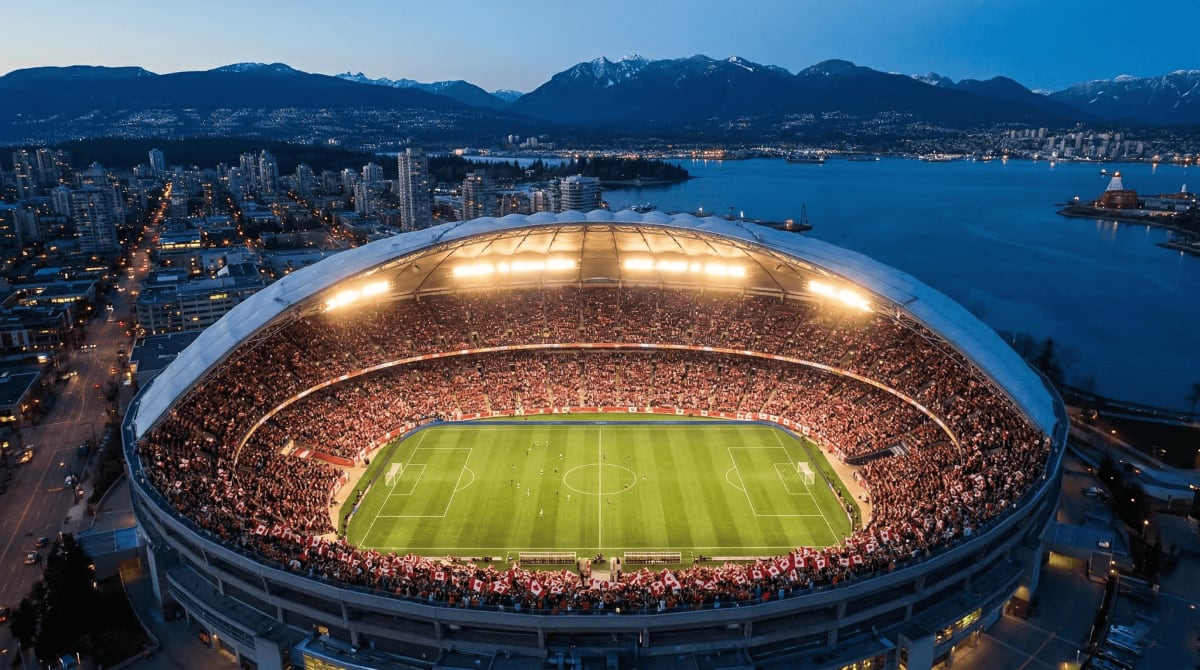
Key Takeaways
- Canada hosts 13 matches in 2026, split between Toronto (7) and Vancouver (7) from 11 June to 19 July.
- Vancouver is cheaper than Toronto for equivalent quality — best-value neighborhoods run CAD $320-$480/night vs Toronto's $400-$620.
- Stay outside the host neighborhood (Junction Triangle in Toronto, Metrotown in Vancouver) and save CAD $200-$400/night with a 25-minute transit ride.
- Vancouver has the easier commute of any 2026 host city — SkyTrain runs every 3-6 minutes during match hours.
- Book by August 2025 for the best rates. Last-minute pricing in either city will be brutal.
Toronto or Vancouver for the 2026 World Cup? An Honest Look
If you are flying to Canada for a 2026 World Cup match and haven't booked anything yet, here is the short answer: Vancouver is the better pick for most travelers.
Canada hosts 13 World Cup matches between 11 June and 19 July 2026, split evenly between Toronto (BMO Field) and Vancouver (BC Place). Vancouver wins on transit, hotel value, and weather odds. Toronto wins if you care more about food culture and walkability than total cost. This post compares both cities with real 2026 hotel pricing, exact transit times to the stadiums, and the specific neighborhoods where smart travelers are actually booking.
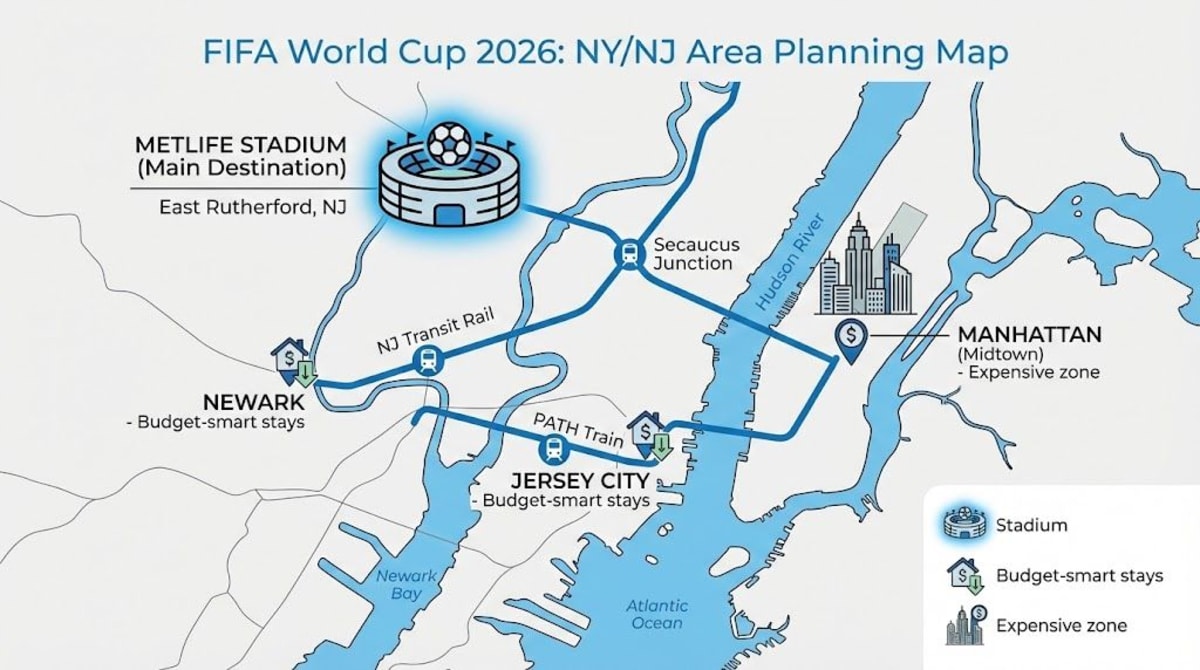
Which Canadian Host City Should You Choose for the 2026 World Cup?
Pick Vancouver if you are flying from Asia, the US West Coast, or want the easiest stadium commute of any 2026 host city. Pick Toronto if you are flying from Europe, want a deeper food scene, or care about walkable post-match nightlife.
If your match dates fall in one specific city, the decision is made for you. The Canadian Soccer Association published the full match schedule in March 2026 (fifa.com/worldcup/2026). Check your match before booking flights.
Here is the practical version of the comparison:
| Factor | Toronto 🍁 | Vancouver 🌲 |
|---|---|---|
| Matches hosted | 7 (5 group + 1 R32 + 1 R16) | 7 (5 group + 2 R32) |
| Stadium | BMO Field (expanded to 45,000) | BC Place (54,500) |
| Best-value neighborhood | Junction Triangle (CAD $220-$340) | Mount Pleasant (CAD $320-$480) |
| Cheapest viable area | Pearson Airport corridor ($180-$280) | Richmond near YVR ($170-$260) |
| Transit to stadium | UP Express + streetcar | SkyTrain (5-25 min anywhere) |
| Weather (June-July) | Warm, humid, 22-28°C | Dry, mild, 18-24°C |
| Closest food culture | Italian, Caribbean, Vietnamese | East/SE Asian, Indigenous, brunch |
What Do Toronto Hotels Actually Cost During the 2026 World Cup?
Indicative match-day rates in Toronto run CAD $180 to $700 per night, with the cheapest viable options in the Pearson Airport corridor and the most expensive on the lakeshore walk to BMO Field.
BMO Field sits in Exhibition Place on Toronto's lakeshore. The neighborhoods that put you within a 15-minute walk or one transit stop are Liberty Village, King West, and Fort York. The areas that save you the most money are Junction Triangle (15 min by streetcar) and the Pearson Airport corridor (25 min on the UP Express).
| Area | Walk/transit to stadium | Match-day rate (CAD/night) | Verdict |
|---|---|---|---|
| Liberty Village / King West | 12-20 min walk | $450-$700 | Premium price, premium convenience |
| Fort York / CityPlace | 8-15 min walk | $400-$620 | Best balance |
| Downtown / Financial District | 1 transit stop, 20-25 min | $380-$580 | Solid mid-tier |
| Junction Triangle | 2 transit stops, 25-35 min | $220-$340 | Best price-for-quality |
| Pearson Airport corridor | UP Express, 25 min to Union | $180-$280 | Best for arriving from Europe |
Rates pulled from Booking.com searches for June-July 2026 match windows. Verify on your booking date.
The honest math: walking distance to BMO Field costs an extra CAD $200-$400 per night versus a 25-minute transit ride. For two people over three nights, that is a $1,200-$2,400 difference. Spend it on the food instead — Toronto's Little Italy, Kensington Market, and St. Lawrence Market are within easy reach from any of the neighborhoods above.
What Do Vancouver Hotels Actually Cost During the 2026 World Cup?
Vancouver match-day hotel rates run CAD $170 to $720 per night, with the strongest value in Mount Pleasant and Metrotown — both 15-22 minutes from BC Place by SkyTrain.
BC Place sits in downtown Vancouver, walking distance from Yaletown, Gastown, and the Stadium-Chinatown SkyTrain station. The Vancouver transit reality is the best of any 2026 host city: SkyTrain runs every 3-6 minutes during World Cup hours, and anywhere in Burnaby, Richmond, or even North Vancouver puts you on the stadium doorstep in 25-40 minutes.
| Area | Walk/transit to stadium | Match-day rate (CAD/night) | Verdict |
|---|---|---|---|
| Yaletown / Gastown | 8-15 min walk | $480-$720 | Premium, walk-only crowd |
| Downtown West End | 15-25 min walk | $400-$580 | Solid downtown experience |
| Mount Pleasant / Olympic Village | SkyTrain, 15 min | $320-$480 | Best price-for-quality |
| Burnaby (Metrotown) | SkyTrain, 22-28 min | $200-$300 | Big savings, malls + food |
| Richmond (near YVR airport) | SkyTrain, 35 min | $170-$260 | Cheapest for flying in |
Rates pulled from Booking.com searches for June-July 2026 match windows.
TransLink (Vancouver's transit operator) confirmed extended SkyTrain hours for match days through their 2026 mobility plan. You will not be in a car. This is the easiest stadium commute in the 2026 tournament — and a big reason Vancouver edges out Toronto on practical value.
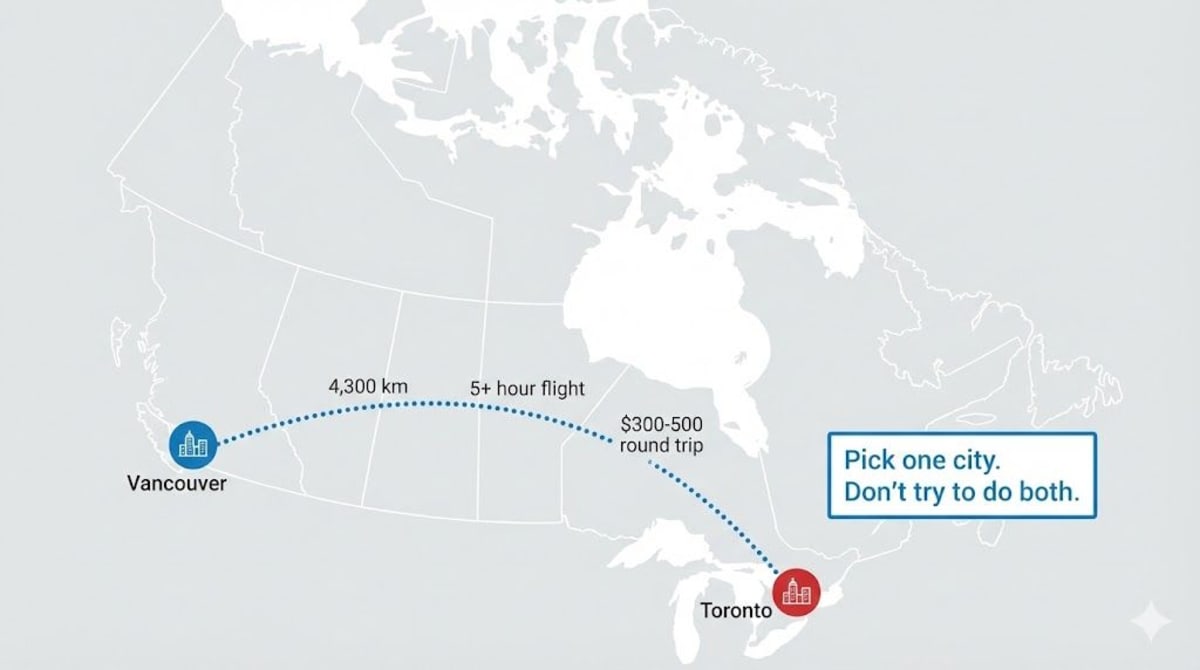
Where Are Smart Travelers Actually Staying?
The underpriced move for both cities: skip the host neighborhood entirely and stay one transit ride out. In Toronto that is Junction Triangle or the Pearson corridor. In Vancouver that is Metrotown or Richmond. The savings are CAD $200-$400 per night. The cost is 20-30 extra minutes of stadium commute time. For most travelers it is a clear win.
The line not to cross: don't stay further out than 45 minutes of transit each way. Past that, post-match traffic and crowd density turn the savings into a real cost — and missing your last train home is a real risk.
If you would rather have someone do the booking math for you across hotels, transit passes, and match-day food spots, that is exactly the kind of trip Navoy plans in a few minutes. Tell it your match dates and city; it returns a full itinerary including booking links.
When Should You Book a 2026 World Cup Trip to Canada?
Book your hotel by August 2025 for the best rates. This is true for both cities. Hotel prices in Toronto and Vancouver were already up 60-110% versus the same dates in 2025 as of February 2026, and 2026 inventory was running 50%+ booked four months before kickoff.
If you missed the early-booking window, two things still work:
- Look outside the city (Junction Triangle, Metrotown, Richmond). Inventory and pricing both stay more reasonable here.
- Match-day cancellations spike about 21-14 days out as confirmed travel plans firm up. Set Booking.com alerts for your dates and check daily in the last three weeks.
Flights are a separate equation. Pearson (YYZ) and Vancouver (YVR) are both well served year-round, but match-week direct flights from Europe and Asia were already running 40-90% above normal as of April 2026.
The Verdict: Toronto vs Vancouver for the 2026 World Cup
Choose Toronto if walking distance and food culture matter most, you are flying from Europe, or you want a more cosmopolitan city after the matches end.
Choose Vancouver if you want the easiest stadium commute, lower hotel prices for equivalent quality, or are pairing the trip with West Coast mountain or ocean time.
Either way: book by August 2025, don't pay downtown prices if you don't have to, and have a plan for both transit and post-match food before you arrive.
If you would rather skip the spreadsheets, Navoy plans the full World Cup trip including hotels, transit, and match-day food in a few minutes. Tell it your match cities and dates and you're done. Plan your 2026 World Cup trip with Navoy.
Related Navoy Reading
- How to Plan a 2026 Trip Online: A Practical Guide — the hub guide for navigating 2026's event-packed year
- Where to Stay During the 2026 World Cup in the US (Without Going Broke) — the same neighborhood-skip strategy applied to the 11 US host cities
- FIFA World Cup 2026 Mexico: Hotel Prices and Stadium Routes — the third leg of the 2026 host trio
Frequently Asked Questions
Is Toronto or Vancouver cheaper for the 2026 World Cup?
Vancouver is meaningfully cheaper than Toronto for equivalent quality. A best-value neighborhood in Vancouver (Mount Pleasant) runs CAD $320-$480 a night during match windows. The Toronto equivalent (Junction Triangle, slightly further out) is $220-$340. But Toronto's downtown-walking premium runs $450-$700 versus Vancouver's $480-$720 — nearly identical at the top end.
How far is BMO Field from downtown Toronto?
BMO Field is 8-15 minutes from Toronto's Financial District by the 509 Harbourfront streetcar, or about 25 minutes on foot from Union Station. Match-day shuttles also run from key transit hubs. The stadium itself sits on the lakeshore in Exhibition Place, not in the downtown core.
How do I get to BC Place from Vancouver airport?
Take the Canada Line SkyTrain from YVR to Stadium-Chinatown station — the trip is about 35 minutes door-to-door and costs CAD $9.85 (with the $5 YVR add-on). SkyTrain runs every 5-7 minutes. No car or rideshare needed. This is the most efficient airport-to-stadium link of any 2026 host city.
Do I need a car for a Canada World Cup trip?
No, you do not need a car in either Toronto or Vancouver for the 2026 World Cup. Both cities have strong transit to the stadiums (Toronto streetcar and UP Express, Vancouver SkyTrain). Renting a car will cost more than transit, and parking near BMO Field or BC Place sells out 10-14 days before match day at premium rates. Skip the car unless you are extending the trip beyond the matches.
When is the best time to book hotels for the 2026 World Cup in Canada?
Book by August 2025 for the best rates and widest selection. Hotels in Toronto and Vancouver typically open match-window inventory 12-15 months in advance, and pricing escalates fastest in the 4-6 months before kickoff. After May 2026, expect at least 60-100% price premiums on the same rooms.
Schema markup to add: FAQPage (mandatory for the FAQ section above), Place for Toronto and Vancouver, SportsEvent for the World Cup matches. Discuss with dev — Strapi may have a SEO plugin that auto-generates these.
Internal links to add elsewhere:
- Homepage → anchor
World Cup 2026 Canadapointing to this post - WC USA blog (Blog 3) → "See also" footer
- WC Mexico blog → "See also" footer
- Trip Planning Guide (Blog 2) → events table row for World Cup
About the Author
Ranym Garali
Ranym is the Marketing and Content Lead at Navoy. She's been writing about travel for two years and digs into the data behind each piece, flight prices, visa rules and what people are actually searching for , so the advice holds up in practice.