Key Takeaways
[auto-translate-smoke 2026-08-13T23:23:47Z] - Major global events are stacking up in 2026, creating historic demand in key destinations.
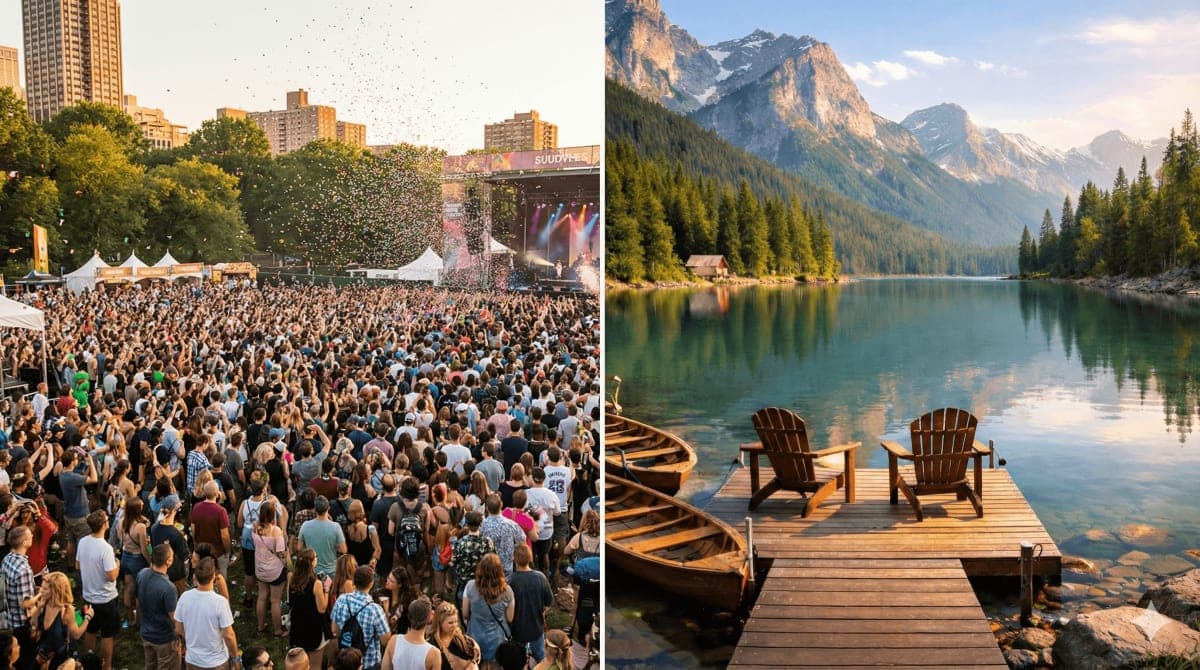
- Travelers who plan around how they want to feel — not just where's popular — will have better experiences.
- Event-adjacent regions require 8–12 months advance booking; prices are up 40–60% in affected areas.
- Quieter alternatives exist for every travel style, from cultural exploration to beach escapes.
- Budget 30% more for experiences (classes, tours, activities) than traditional sightseeing.
What Makes 2026 Different for Travelers?
If you're planning a trip in 2026, timing matters more than usual. This year brings multiple large-scale global events — some overlapping — creating concentrated demand, higher prices, and unusually crowded destinations.
| Event | Location | When | Impact |
|---|---|---|---|
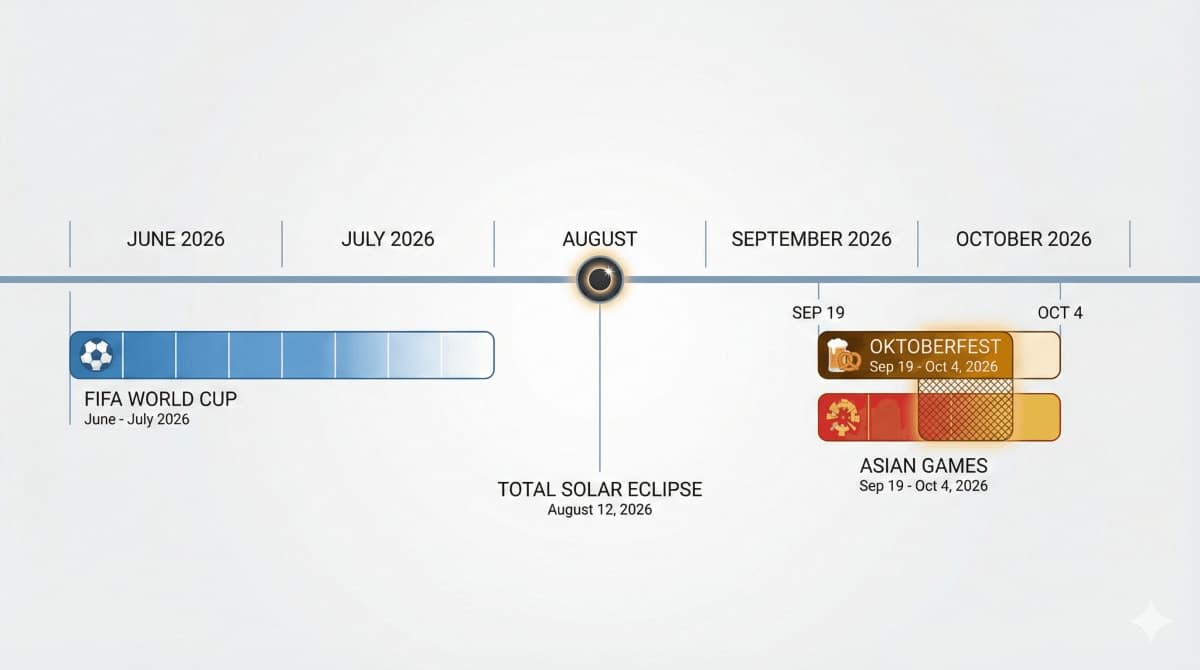
| FIFA World Cup | USA, Canada, Mexico | June–July | 48 teams, 16 cities. Flights up 40-60% vs. 2025. |
| Total Solar Eclipse | Iceland, Spain, Greenland | August 12 | Path of totality already 96% booked (as of February 2026). |
| Oktoberfest | Munich, Germany | Sept 19 – Oct 4 | 6 million visitors. Munich hotels book out months ahead. |
| Asian Games | Aichi-Nagoya, Japan | Sept 19 – Oct 4 | 15,000 athletes. Significant strain on regional transport across central Japan. |
Beyond these headline events, 2026 also brings the Venice Biennale (May–November), the Edinburgh Festival Fringe (August), multiple Formula 1 Grands Prix across Europe and the Americas, and regional draws like Coachella (April) and Songkran in Thailand (April). If your travel dates overlap with any of these, expect localized price surges and tighter availability.
This doesn't mean 2026 is a bad year to travel. It means planning matters more than usual. Whether you're attending an event or intentionally avoiding one, success comes down to clarity: what kind of trip do you actually want?
2026 travel trends — what's different this year
Three shifts are reshaping how people plan trips in 2026:
1. AI travel planning has gone mainstream. Travellers are no longer asking whether to use AI — they're choosing between AI agents that just plan (Mindtrip, Wonderplan) and ones that plan and book (Navoy). The decision-making category has split.
2. Multi-city trips are up. Instead of one long stay, travellers are stitching together 2–3 destinations per trip — a London + Lisbon + Marrakech kind of itinerary. AI itineraries handle the multi-leg complexity that used to require an agency.
3. Visa-free corridors are the new shortcut. Routes like UAE → Georgia → Türkiye, or Mexico → Colombia → Peru, are getting booked because visa friction is the single biggest deterrent for cross-region travel. AI tools that filter by visa requirements are the practical advantage.
If you're planning a 2026 trip, those three trends should shape your shortlist before you pick dates.
How Should You Choose Where to Go in 2026?
The traditional approach — picking a famous destination first — works less well this year. Many iconic cities are hosting events or feeling spillover effects.
A better starting point: decide the experience first.
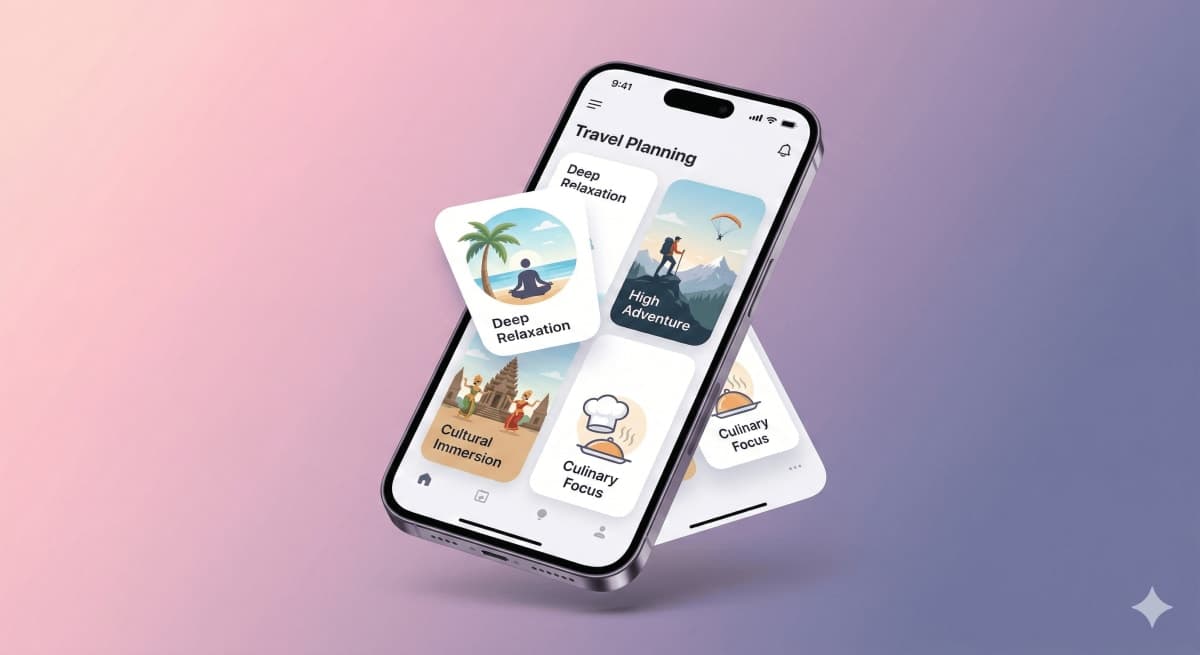
Do you want culture and history? Adventure? Rest and quiet? Great food? The destination should follow the feeling — not the other way around.
Here are six alternatives worth considering, each aligned to a different travel style.
Best Places to Travel in 2026 (By Experience)
For Cultural Exploration
Uzbekistan — Silk Road cities like Samarkand and Bukhara offer extraordinary Islamic architecture and growing tourism infrastructure, without 2026 event pressure.
For Adventure & Outdoors
Slovenia — The Julian Alps, Lake Bled, and Europe's largest show cave (Postojna). Compact, scenic, and far from major event zones.
For Wellness & Retreat
Finland (Lakeland region) — Silent retreats, forest bathing, and lakeside saunas. Designed for disconnection.
For Food & Culinary
Oaxaca, Mexico — Widely considered Mexico's culinary capital. Mole, mezcal, and indigenous ingredients — away from World Cup host city congestion.
For Local & Authentic
Albania — Ottoman-era towns and Adriatic coastline. Affordable, increasingly accessible, and largely outside 2026's major traffic flows.
For Beach & Relaxation
Greece (Lesser Cyclades) — Islands like Koufonisia and Schinoussa offer turquoise water without Santorini-level crowds.
How to Book Travel in 2026
A few practical realities for this year:
Book earlier than usual.
- Event zones: 8–12 months ahead
- Standard international trips: 4–6 months
- Regional trips: 6–8 weeks may still work
Expect higher experience costs. Travelers are spending more on guided hikes, culinary workshops, and cultural tours — often 30% more than previous years. Budget accordingly.
Longer stays often cost less. Two weeks in one region typically beats five cities in ten days. You save on transport and often secure better weekly accommodation rates.
How to plan an international trip online in 2026 — step by step
This is the workflow that works in 2026, whether you use Navoy or a stack of separate tools:
- Start with the constraint, not the destination. Define your budget, dates, and visa-free options first. Most failed trips fail because the destination was chosen before the constraints.
- Pick the trip shape. One city deep-dive, multi-city loop, or hub-and-day-trip. Each has different cost and logistics profiles.
- Run an AI itinerary draft before searching flights. A draft itinerary tells you which cities to fly into and out of — that single decision can save 30% on flights.
- Layer hotels on top of the itinerary, not the other way round. Hotel location is downstream of where you'll spend your days.
- Book in this order: flights → primary hotels → activities → transfers. Locking flights last is the most common (and most expensive) mistake.
- Confirm visa requirements 6+ weeks out. Even visa-free destinations often need ESTA/eTA/ETIAS approvals that take days.
- Leave 1–2 unplanned half-days per week. The trips travellers rate highest always have white space.
Build your 2026 trip with Navoy in under 60 seconds →
FAQ
What are the best ways to plan international trips online in 2026?
The fastest, cheapest, and lowest-friction way in 2026 is to use an AI travel agent that handles both planning and booking — like Navoy. AI itineraries cut planning time from days to minutes, and modern AI agents now book flights, hotels, and transfers in one workflow. The DIY route (Google Flights + Booking + a spreadsheet) still works but typically takes 8–15 hours per trip.
What is the 2026 tourism outlook?
International travel is forecast to keep growing through 2026, with Asia-Pacific and the Middle East recovering fastest. Travel costs have stabilised after the 2023–2024 spikes, but peak-season pricing on flights and hotels remains 10–20% above pre-pandemic baselines. The bigger shift is how people plan — AI tools are now the default first step.
What are the best 2026 travel trends to watch?
Three matter most: (1) AI travel planning becoming the default first step; (2) multi-city itineraries replacing single-destination trips; (3) visa-free corridors driving destination choice. If you're picking destinations for 2026, optimise for low visa friction first.
How do I plan a multi-city trip in 2026?
Use an AI agent that can build a multi-destination itinerary in one prompt — give it your origin, return city, total days, and constraints, and let it sequence the cities by flight cost and travel time. Manual multi-city planning across 3+ cities typically takes 2× the time of a single-destination trip.
Ready to plan your 2026 trip?
About the Author
Ranym Garali
Ranym is the Marketing and Content Lead at Navoy. She's been writing about travel for two years and digs into the data behind each piece, flight prices, visa rules and what people are actually searching for , so the advice holds up in practice.