
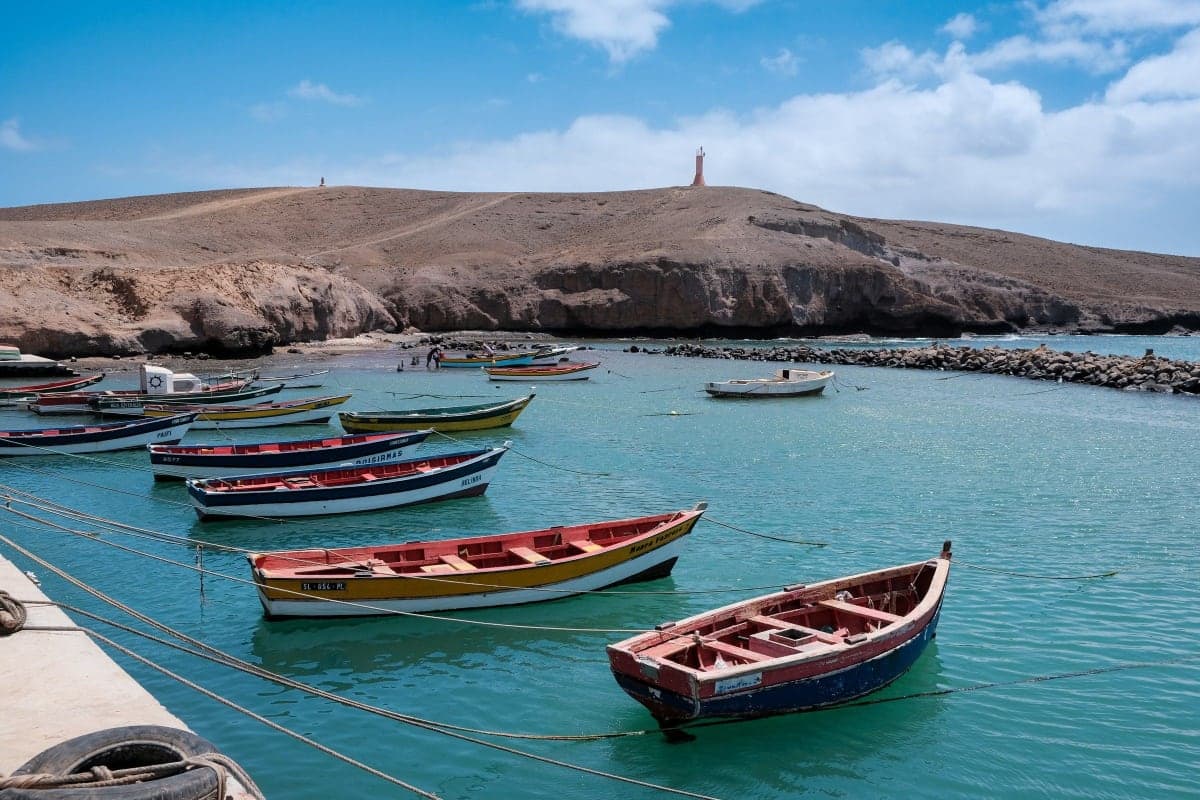
Sal, Cape Verde
A flat, dry Atlantic island built around one long white beach in Santa Maria, with a salt crater you can float in and a natural lava pool on the west coast.
Updated
Key Takeaways
- Santa Maria is the base: the long beach, most restaurants and nearly all hotels are there, a short transfer from the airport.
- The sea stays warm all year, about 22°C in the cooler months and up to 26°C from August to November.
- Pedra de Lume is a half-day trip: a volcanic crater of salt ponds where the water is so salty you float without effort.
- The Blue Eye at Buracona lights up around midday, so plan that visit for late morning or early afternoon.
- Loggerhead turtles nest from June to October, peaking from August into early September: keep lights off near the sand.
Why Is Sal Worth Visiting?
Sal gives you reliable sun, a warm Atlantic and a small island you can explore in a few days, with a salt crater to float in, a natural lava pool and a fishing pier as the breaks between beach days.
Be honest about what Sal is: a flat, dry island of volcanic rock and sand, with one long white beach at Santa Maria. There are no rainforests or mountain villages here; the greener islands of Cabo Verde suit hikers better. Sal suits people who want warm water, a slow pace and a few striking landscapes that look nothing like the rest of the archipelago. Navoy builds a day-by-day itinerary and books the stays and transfers in the same flow.
Where Should You Stay in Sal?
Stay in Santa Maria: the town for restaurants and the pier, or the beach strip to its west for larger hotels. Espargos only suits a single night before an early flight.
Santa Maria town
The island's main tourist town, with restaurants, bars that host live music in the evening, and a beach at the end of most streets.
Santa Maria beach strip
The resort coast west of town. Larger hotels, direct beach access, and a short taxi ride back to the restaurants.
Espargos
The island's largest town, close to the airport. Everyday Cabo Verdean life and very few beaches, so it works for one night between flights.
Palmeira
A fishing village on the west coast and the closest base for Buracona. Quiet, with very few visitors.
| Area | Best For | Atmosphere | Getting Around |
|---|---|---|---|
| Santa Maria town | Restaurants, pier, evenings | Small-town, lively after dark | Walk, or a short taxi |
| Santa Maria beach strip | Beach-first stays | Resort, quiet at night | Taxi to town |
| Espargos | One-night stopovers | Everyday town, no beach | Short transfer from the airport |
| Palmeira | Buracona, quiet days | Working fishing village | Taxi or hire car |
What Are the Best Things to Do in Sal?
Float in the salt crater at Pedra de Lume, time your visit to Buracona for midday, watch the boats land at the Santa Maria pier, and spend most days on the beach and in the sea.
- Pedra de Lume: salt evaporation ponds inside a volcanic crater. Take a half-day trip from Santa Maria. The old cable car once carried salt down to the port, and its posts still mark the route. Rinse off afterwards, because the salt stings.
- Buracona and the Blue Eye: a natural lava-rock pool near Palmeira on the west coast. Sunlight through an opening in the rock turns the water an intense blue around midday, so go in late morning or early afternoon.
- Santa Maria pier: fishing boats land their catch here. Free, and a short walk from the town's hotels.
- Beach days: the sea stays warm all year, so swimming and snorkelling work in every month, and the long beach at Santa Maria is the island's main draw.
- Morna and cachupa: morna is Cabo Verde's slow, melancholy song form, and bars in Santa Maria often host live music. Order cachupa, the national stew of hominy, beans and fish or meat.
What Should You Know Before Visiting Sal?
Plan around the sun and the sea, carry some cash in escudos, and keep off the nesting beaches at night from June to October.
Sea temperatures stay between about 22°C and 26°C through the year, warmest from August to November. Average air temperatures run from about 22°C in January to about 27°C in September, so sun protection matters more than warmth. The wettest months are roughly August to October, but the rain is light and short. The escudo is pegged to the euro, so exchange rates are steady; check the current rate before you travel.
Loggerhead turtles nest on Sal's beaches from June to October, with activity peaking from August into early September. Keep lights off near the sand and do not disturb nesting turtles. Planning a trip at navoy.io is free.
Frequently Asked Questions
How many days do you need in Sal?
Five to seven days is the sweet spot. Two half-days cover the main sights, Pedra de Lume and Buracona, and the rest is beach, sea and rest. Longer stays suit people who want more time on the water or a slower pace.
Is Santa Maria or Espargos better as a base in Sal?
Santa Maria, almost always. It has the beach, the pier, most restaurants and nearly all the hotels, and the airport is a short transfer away. Espargos is cheaper and more local but has no beach, so it only makes sense for a single night before an early flight.
When is the best time to visit Sal?
November to April is the driest season with the most comfortable air temperatures. August to November brings the warmest sea, which suits swimmers, though it is also the wettest period, with light rain. Turtle nesting runs from June to October. There is no bad month, but book early for the busiest holiday weeks.
Featured Itineraries
Swipe to see more →