
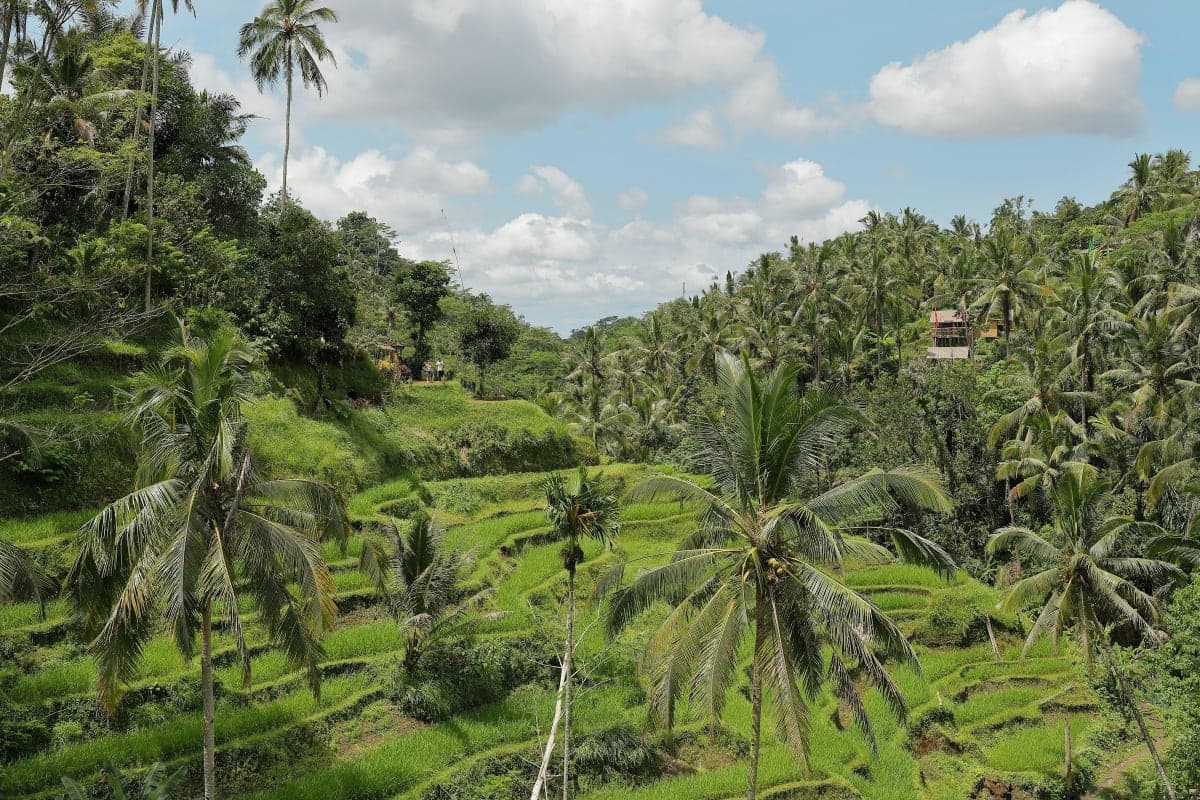
Bali, Indonesia
An island of rice terraces, surf breaks and Hindu temples, where each area has its own rhythm: Canggu for surf and cafés, Ubud for culture, Uluwatu for cliffs and sunsets.
Updated
Key Takeaways
- Bali's dry season runs roughly April to October, the best window for beaches, surf and temple visits; the wet season brings short, heavy tropical downpours.
- Choose your base by trip style: Canggu for surf, yoga and cafés; Ubud for rice terraces and culture; Uluwatu for cliffs, beaches and sunsets.
- Traffic is slow, so short distances can take a long time; plan each day around one area rather than crossing the island.
- Temples require covered shoulders and a sarong, which temples usually lend or rent at the entrance.
- On Nyepi, the Balinese Day of Silence (in March or April), the whole island shuts down for 24 hours, including the airport.
Why Is Bali Worth Visiting?
Bali offers surf, wellness retreats, rice terraces and a living Hindu temple culture on one island, with good value for money and bases that suit everyone from solo remote workers to honeymooners.
Bali is really several destinations in one. The south-west coast around Canggu is built around surf breaks, yoga studios and laptop-friendly cafés. Inland, Ubud is surrounded by rice terraces, craft villages and water temples. On the southern Bukit Peninsula, Uluwatu's limestone cliffs drop to white-sand coves. Navoy splits your days by area so you spend more time exploring and less time in traffic, and books the stays in the same flow.
Where Should You Stay in Bali?
Canggu suits surfers and remote workers, Ubud suits culture and wellness travellers, and Uluwatu suits couples who want beaches and sunsets; many trips split the stay between two of them.
Canggu
Black-sand beaches, beginner-friendly surf at Batu Bolong, yoga studios and a dense café scene popular with digital nomads.
Ubud
Bali's cultural centre in the hills, close to the Tegallalang rice terraces, the Sacred Monkey Forest Sanctuary and the holy spring temple of Tirta Empul.
Uluwatu
Cliff-top views, surf reefs and small white-sand beaches, with the sea temple of Pura Luhur Uluwatu at the southern tip.
Seminyak
Beach clubs, boutiques and restaurants between Canggu and the airport, with easier logistics for short stays.
| Area | Best For | Atmosphere | Time from Airport |
|---|---|---|---|
| Canggu | Surf, remote work, yoga | Social, busy | About 45 minutes to 1 hour |
| Ubud | Culture, rice terraces, wellness | Green, calm | About 1.5 to 2 hours |
| Uluwatu | Couples, beaches, sunsets | Relaxed, spread out | About 45 minutes to 1 hour |
| Seminyak | Short stays, dining, beach clubs | Lively, polished | About 30 minutes |
What Are the Best Things to Do in Bali?
Walk the Tegallalang rice terraces, bathe at Tirta Empul, watch the Kecak fire dance at Uluwatu Temple at sunset, and take a surf lesson in Canggu.
- Tegallalang rice terraces: Stepped paddies north of Ubud, best early in the morning before tour groups arrive.
- Tirta Empul: A water temple where visitors can join the purification ritual in the spring-fed pools; sarongs can be borrowed or rented at the entrance.
- Uluwatu Temple and the Kecak dance: A cliff-edge sea temple with a sunset fire dance performance.
- Sacred Monkey Forest Sanctuary: A forest temple complex in Ubud home to long-tailed macaques; keep bags closed.
- Surf lessons in Canggu: Batu Bolong's gentle waves make it one of the island's easiest places to learn.
- Balinese cooking class: Market visit and cooking session, widely offered around Ubud.
What Should You Know Before Visiting Bali?
Hire a driver or use ride-hailing apps rather than riding a scooter without a licence, dress respectfully at temples, and drink bottled or filtered water.
Bali's roads are narrow and congested, so a private driver for day trips is often better value than it sounds. If you rent a scooter, you need your home motorcycle licence plus an International Driving Permit valid for motorcycles, and travel insurance may not cover you without them. At temples, cover your shoulders and knees and wear a sarong. Offerings (canang sari) on pavements are sacred, so step around them. Tap water is not safe to drink, and ATMs inside banks or convenience stores are a safer way to get rupiah.
Frequently Asked Questions
How many days do you need in Bali?
A week lets you split your stay between two areas, such as three nights in Ubud for culture and four in Canggu or Uluwatu for the coast. Ten days or more suits a slower pace with surf lessons, wellness retreats and a day trip to the Nusa islands. Avoid changing base every night, because traffic eats into your time.
Is Canggu or Ubud better as a base in Bali?
Canggu is better for surf, beaches, cafés and nightlife, and suits remote workers who want a social scene. Ubud is better for rice terraces, temples, yoga and a quieter, greener setting. Many travellers stay in both: Ubud for the first few days, then the coast to relax.
When is the best time to visit Bali?
The dry season from April to October brings sunny days and lower humidity, with July and August the busiest months. April, May, June and September are good-value shoulder months. The wet season from November to March brings short, heavy rain showers but greener landscapes and fewer crowds.
Featured Itineraries
Swipe to see more →