Key Takeaways
- The Event: Over 15,000 athletes will compete in Central Japan from September 19 to October 4, 2026 — with early-round competition starting September 10.
- The Geography Trap: Key sports like Swimming and Equestrian are held in Tokyo, up to 350 km from the host city of Nagoya.
- The Hotel Hack: Watch the "30-Day Hotel Drop" on August 19, 2026 — when delegations release unused room blocks.
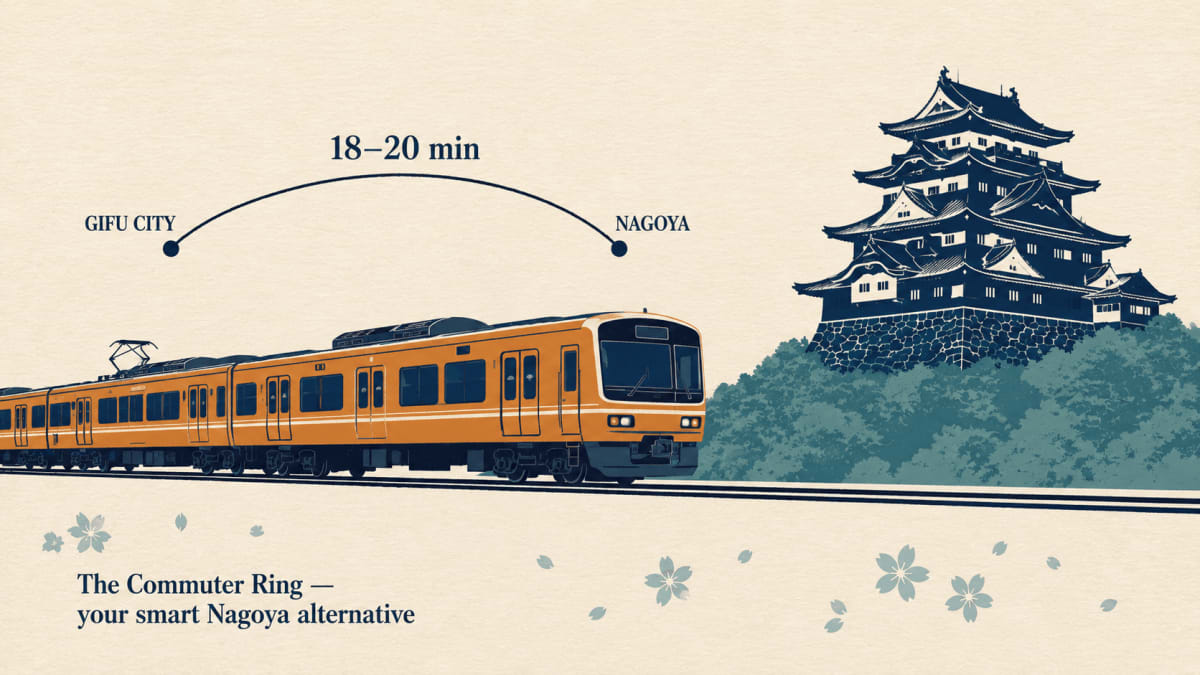
- Commuter Secret: Stay in Gifu City for an 18-minute JR commute to Nagoya at a fraction of the cost.
Planning Japan in Fall 2026? The Asian Games Will Affect Your Trip
If you're planning a Japan trip in September or October 2026, the 20th Asian Games will affect your logistics, your budget, and your hotel options — even if you're not attending. The ceremonies run September 19 to October 4, but early-round competition starts September 10, which extends the real travel-impact window to roughly September 8 through October 5. Approximately 15,000 athletes from 45 countries will compete across Aichi, Tokyo, and Shizuoka — the first Asian Games hosted in Japan since Hiroshima 1994 (Olympics.com).
Most Western travel guides for fall 2026 haven't picked this up yet. Here's what you need to know about dates, the "Geography Trap," and the hotel strategies that work.
When are the Asian Games 2026 and where?
The 20th Asian Games run from September 19 to October 4, 2026, with the opening ceremony at Paloma Mizuho Stadium in Nagoya — but competition begins nine days earlier on September 10, so the practical travel-impact window is September 8 to October 5. The Games are officially hosted by Aichi Prefecture and Nagoya City, with venues spread across three additional prefectures.
A few anchors before the planning:
- First Japan host since 1994 (Hiroshima).
- ~15,000 athletes from 45 countries plus delegations, coaches, international media, and tens of thousands of fans.
- Exact overlap with Oktoberfest 2026 (also September 19 – October 4) — global travel demand is already shifting.
For travel, the headline isn't the ceremony dates. It's the early-start window: hotel blocks, Shinkansen capacity, and transit pricing tighten from early September, not from the 19th.
What is the "Geography Trap" in the Nagoya Asian Games?
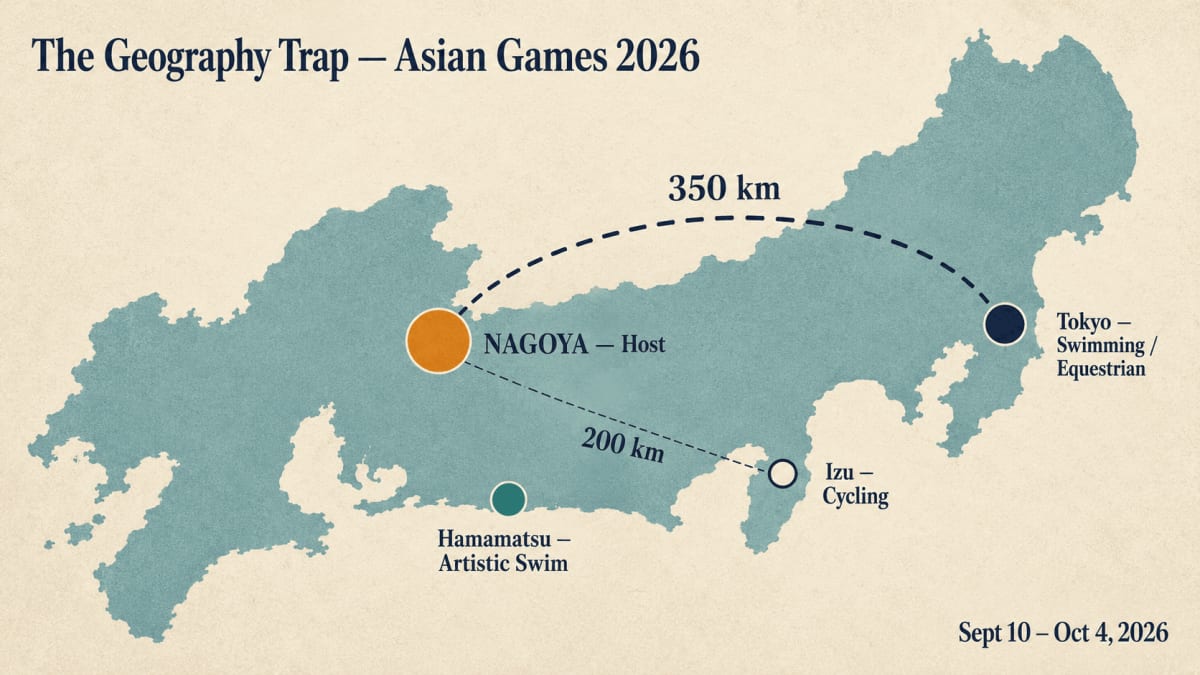
The "Geography Trap" is the gap between the "Aichi-Nagoya" branding and reality: high-profile sports like Swimming and Equestrian are actually held in Tokyo, up to 350 km from Nagoya. The organisers cut costs by reusing venues from the Tokyo 2020 Olympics, so venues span four prefectures. Travellers who book a Nagoya hotel assuming everything is local risk being hours away from their event.
The "Exiles": Sports located outside Nagoya
| Sport | Venue | Location | Distance from Nagoya |
|---|---|---|---|
| Swimming & Diving | Tokyo Aquatics Centre | Tokyo | 350 km (1.5–2 hrs Shinkansen) |
| Equestrian | Baji Koen | Tokyo | 350 km (1.5–2 hrs Shinkansen) |
| Track Cycling | Izu Velodrome | Izu, Shizuoka | 200 km (2.5+ hrs transit) |
| Artistic Swimming | TBC | Hamamatsu | 100 km (45 min Shinkansen) |
Sources: Aichi-Nagoya 2026; FEI Equestrian.
Rule of thumb: match your hotel to your sport, not to the name of the Games. If your ticket is to Swimming finals, your trip is a Tokyo trip with a side of Aichi — not the other way around.
How will the Asian Games affect Japan travel in fall 2026?
Expect a noticeable accommodation squeeze in Nagoya, elevated Shinkansen demand between Tokyo and Nagoya, and pricier hotels in Tokyo's Koto Ward (near the Aquatics Centre) during the window. The effect is concentrated in Central Japan and the Tokyo–Nagoya corridor; Kyoto and Osaka should feel only secondary spillover.
If you're not attending the Games:
- Skip Central Nagoya on the opening and closing weekends (Sept 18–20 and Oct 3–5).
- Consider Gifu City as a base for the Chubu region (more on this below).
- Or stick to the standard Tokyo–Kyoto–Osaka "Golden Route" and treat Nagoya as a quick stop, not a stay.
If you are attending:
- Match hotel to sport. A Swimming ticket means a Tokyo hotel.
- Book Shinkansen seats in advance — peak-window capacity gets tight.
- The opening week (Sept 19–25) is the most chaotic; weekday matches mid-event are calmer.
How does the 30-Day Hotel Drop save your Japan trip?
The "30-Day Hotel Drop" is when official delegations release unused room blocks as they finalise their athlete rosters — usually exactly 30 days before the event. For the 2026 Asian Games, that release lands around August 19, 2026, when rooms that appeared "sold out" earlier in the year start reappearing on the major booking platforms. It's not magic — it's how every large multi-sport event prices out.
Practical use:
- Set a calendar alert for August 15–22, 2026 and check Nagoya and Tokyo (Koto Ward / Toyosu) inventory daily.
- The drop is most useful for mid-range and luxury stays — budget hotels rarely block-book to delegations, so they sell out earlier and don't drop back.
- Risk level: medium. You're trading certainty for better pricing. If your dates are non-negotiable and your budget is tight, book in May and stop watching the market.
The Commuter Ring: why Gifu City is the smart Nagoya alternative
Gifu City is 18–20 minutes from Nagoya Station on the JR Tokaido Line, with hotel prices well below central Nagoya during the Games — and a historic castle-town atmosphere that beats sleeping next to a major station. It's the single highest-leverage swap in the Chubu region for the fall 2026 window.
What you get:
- Commute: 18–20 min via the JR Central Tokaido Line Rapid service.
- Cost: Materially cheaper than Nagoya Station hotels during peak Games dates.
- Bonus: Gifu Castle, the Nagara River cormorant fishing tradition, and a quiet evening pace.
- Gateway: Direct access to the scenic Nakasendo Trail towards Magome and Tsumago.
If Gifu fills up too, Toyohashi (east, 30 min by Shinkansen) and Yokkaichi / Tsu in Mie Prefecture (south, 30–50 min) are the next concentric rings.
What are the best "Hidden Aichi" things to do beyond the Games?
The 2026 Games are a good excuse for "Japan Repeaters" to skip the Kyoto crowds and explore the Chubu region — Inuyama Castle, the Nakasendo Trail, and Nagoya's distinctive food culture all sit within an easy day from the host city. Most Western itineraries park in Kyoto for three nights and never see this part of Japan; this window is the moment to fix that.
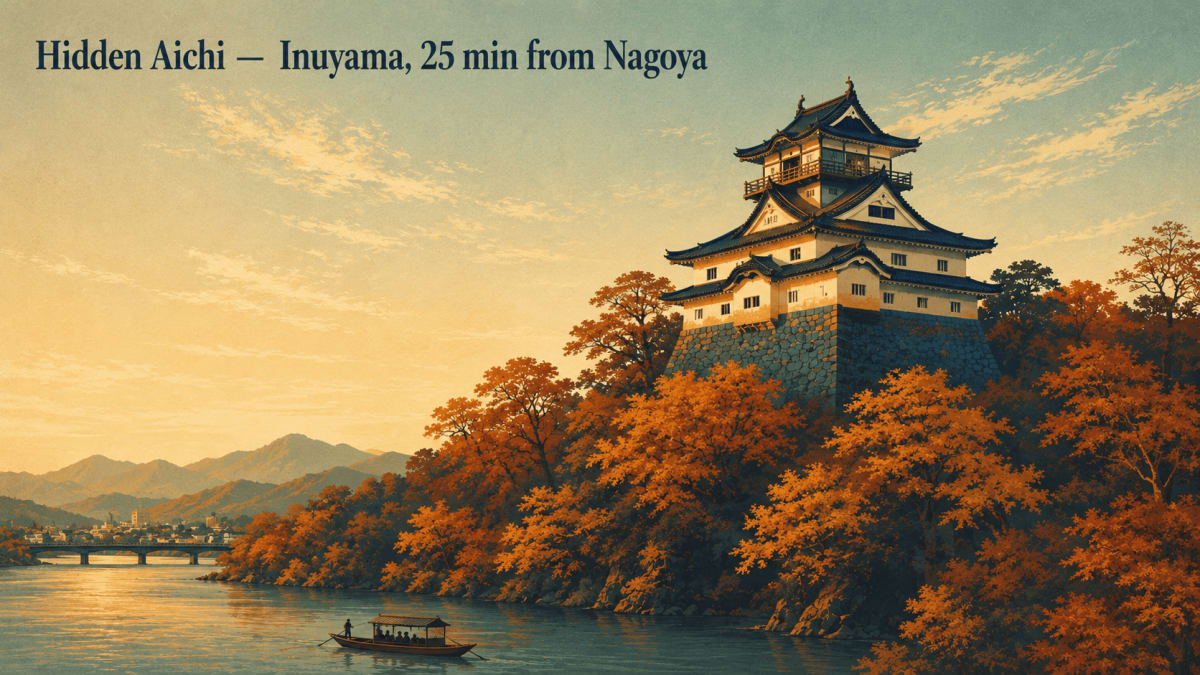
Inuyama: the "Little Kyoto" 25 minutes from Nagoya
Inuyama Castle is one of only five remaining original castles in Japan (a National Treasure). The surrounding town has Edo-period streets, river-cruise cormorant fishing in summer, and a fraction of Kyoto's foot traffic.
Nagoya meshi: a food culture you only get here
- Hitsumabushi — grilled eel served over rice, eaten in three stages: plain, with condiments, then with dashi poured over.
- Morning Service — the local coffee-shop ritual (perfected by chains like Komeda's Coffee) where ordering a coffee comes with a free breakfast of toast and a hard-boiled egg.
- Tebasaki — peppery fried chicken wings; the Sekai no Yamachan vs. Furaibo debate is Nagoya's "Coke vs. Pepsi."
The Nakasendo Trail
A preserved Edo-period post-road between Magome and Tsumago. The 8 km walk through cedar forest and old post towns is one of the most atmospheric day trips in Japan — and it's two hours from Nagoya.
Practical tips for a fall 2026 Japan trip
Plan around three windows: the early-start window (Sept 8 onwards), the ceremony peak (Sept 18–25), and the closing weekend (Oct 3–5). Outside those, the impact is real but manageable.
- Dates that matter: Sept 10 (competition starts), Sept 19 (opening), Oct 4 (closing).
- Hotel drop alert: Aug 19, 2026 (±3 days).
- JR Pass economics: After the October 2023 price hike (+69%), the National JR Pass is rarely worth it for a Nagoya-centred trip. The JR Takayama-Hokuriku Area Tourist Pass often beats it for the Aichi–Gifu–Kanazawa loop.
- Typhoon Plan B: Late September is peak typhoon season. Nagoya has extensive underground arcades (Sakae, Meieki) and the SCMAGLEV and Railway Park as indoor backups.
- Tickets: International buyers cannot purchase from the domestic Japanese lottery directly. Use the Authorized Ticket Reseller for your country.
FAQ
When are the Asian Games 2026 held?
The 20th Asian Games run from September 19 to October 4, 2026, with the opening ceremony at Paloma Mizuho Stadium in Nagoya. Early-round competition begins nine days earlier, on September 10, so the practical travel-impact window for Central Japan stretches from roughly September 8 to October 5.
Where are the Asian Games 2026 being held?
The Games are hosted by Aichi Prefecture and Nagoya City, but venues span four prefectures: Aichi, Tokyo, Shizuoka (Izu and Hamamatsu), and Mie. Roughly 30% of events are in Nagoya city, 50% across other Aichi cities, and the rest in Tokyo and Shizuoka — including Swimming, Equestrian, and Track Cycling.
Will the Asian Games affect Japan travel in 2026?
Yes. Expect higher hotel prices and tighter availability in Nagoya, plus elevated Shinkansen demand between Tokyo and Nagoya from September 8 through October 5. Travellers not attending should consider Gifu City as a base or stick to Kyoto/Osaka/Tokyo on standard Golden Route dates and treat Nagoya as a short stop.
How do I get tickets for the 2026 Asian Games?
International buyers cannot purchase directly from Japan's domestic ticket lottery. You need to go through your country's Authorized Ticket Reseller. Popular events like Swimming finals and the opening ceremony require early registration with your country's ATR — confirm availability before booking flights.
Is it safe to visit Nagoya during typhoon season?
Generally yes, but late September is peak typhoon risk in Central Japan. Outdoor events (Archery, Baseball, the marathon) can be paused or rescheduled. Build flexibility into your itinerary and have indoor backups — Nagoya's underground shopping streets and the SCMAGLEV and Railway Park are good rainy-day options.
The Bottom Line
The 2026 Asian Games aren't a Nagoya story — they're a four-prefecture story with an early-September start that most Western travel coverage misses. Match your hotel to your sport, not to the name of the Games. Watch the August 19 room drop. Consider Gifu as a base. And if you're not attending, treat fall 2026 as the year you finally explore Hidden Aichi while everyone else is queueing in Kyoto.
Related reading:
- What is a personalised travel itinerary? — the pillar guide on planning around fixed events
- How expensive are World Cup tickets in 2026? — the other big 2026 event-travel story
- Coolcation 2026: Iceland vs Norway vs Scotland — the calm-summer trend
Plan your Japan 2026 trip with Navoy — free tier or Pro at $12.99/month. Get started →
About the Author
Ranym Garali
Ranym is the Marketing and Content Lead at Navoy. She's been writing about travel for two years and digs into the data behind each piece, flight prices, visa rules and what people are actually searching for , so the advice holds up in practice.