
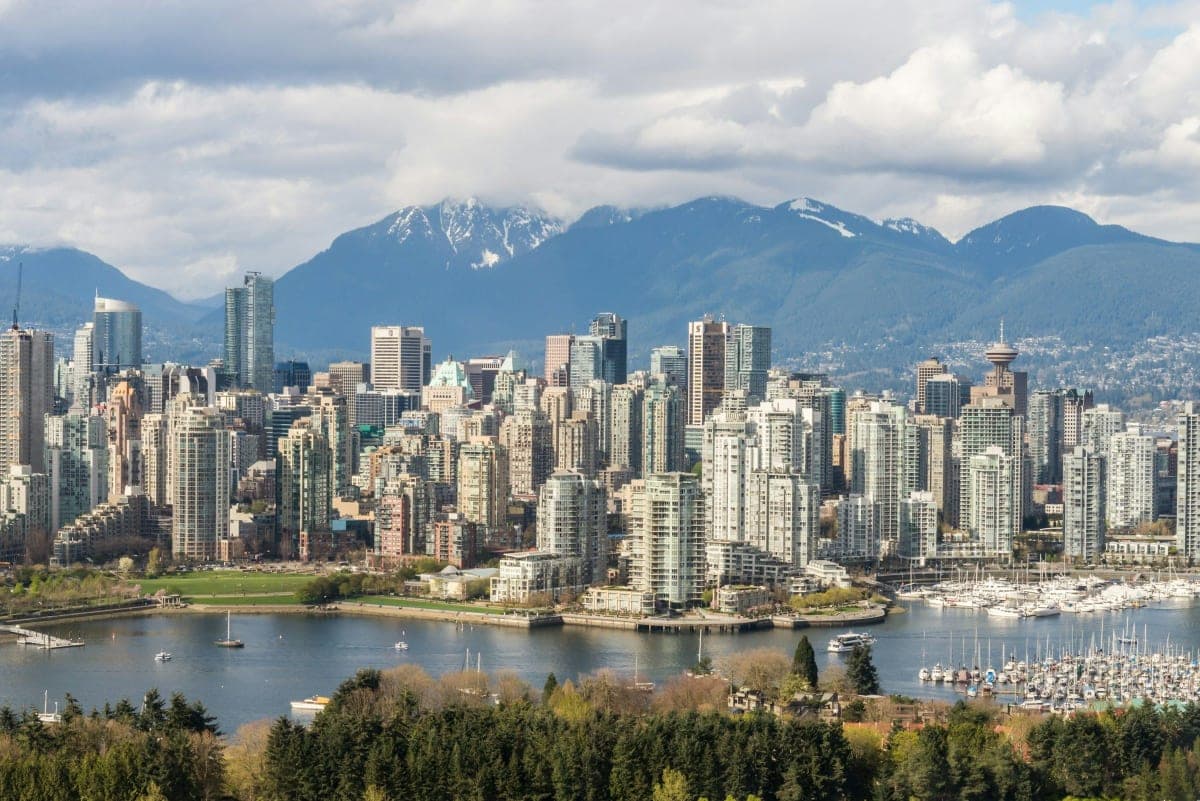
Vancouver, Canada
A harbour city with mountains at the end of the street: seawall rides in Stanley Park, market lunches on Granville Island and a gondola up the North Shore in the same day.
Updated
Key Takeaways
- Vancouver is at its best from June to September, when July and August are the driest months and daytime highs sit in the low 20s °C.
- The Canada Line train takes about 25 minutes from the airport to downtown, so you can arrive without a car.
- The Stanley Park seawall loop is about 9 km, flat and walkable or rideable in a morning.
- Whistler is roughly two hours by road along the Sea-to-Sky Highway, and Victoria is a ferry crossing of about 1 hour 35 minutes from Tsawwassen.
- November to March is the wet season, so pack a rain jacket and plan indoor stops.
Why Is Vancouver Worth Visiting?
Vancouver puts a walkable harbour city, a long seawall, a food scene and mountain days within a short transit ride of each other, which makes it one of the easiest big cities in North America to explore without a car.
Downtown sits on a peninsula between Burrard Inlet and False Creek, with Stanley Park at its tip and the North Shore mountains filling the skyline across the water. You can walk the seawall in the morning, eat at a market at lunch and be on a mountain gondola by late afternoon. Summers are dry and bright, and the city doubles as the starting point for Whistler and Victoria. Navoy builds a day-by-day itinerary and books the stays and transfers in the same flow.
Where Should You Stay in Vancouver?
Stay downtown or in Yaletown for first visits, Kitsilano for beaches and a local feel, and the North Shore if mountains matter more than nightlife.
Downtown and Coal Harbour
The easiest base: the Canada Line, SkyTrain, SeaBus and the Stanley Park seawall are all close, and the cruise-ship waterfront and convention district are on the doorstep.
Gastown and Yaletown
Gastown has cobblestone streets, Victorian-era brick buildings and its famous steam clock. Yaletown, a former warehouse district, is now a polished stretch of patios and restaurants beside False Creek.
Kitsilano
A residential beach neighbourhood facing English Bay, with Kitsilano Beach, cafés on West 4th Avenue and a quick ride to Granville Island.
North Vancouver
Across Burrard Inlet, close to Capilano, Lynn Canyon and Grouse Mountain, and reached from downtown by SeaBus in about 12 minutes.
| Area | Best For | Atmosphere | Time from Airport |
|---|---|---|---|
| Downtown and Coal Harbour | First visits, transit, seawall | Busy, central | About 25 minutes by Canada Line |
| Gastown and Yaletown | Dining, nightlife, heritage streets | Lively, walkable | Canada Line plus a short walk |
| Kitsilano | Beaches, families, local cafés | Relaxed, residential | Canada Line plus a short bus or taxi ride |
| North Vancouver | Mountains, trails, quieter evenings | Outdoorsy, calm | Canada Line, then SeaBus |
What Are the Best Things to Do in Vancouver?
Cycle or walk the Stanley Park seawall, eat your way around Granville Island, cross a North Shore canyon on a suspension bridge and take the gondola up Grouse Mountain.
- Stanley Park seawall: A loop of about 9 km around the park, passing the totem poles at Brockton Point and views across to the North Shore. Cyclists ride one way, counter-clockwise.
- Granville Island Public Market: Produce, seafood, bakeries and ready-to-eat stalls under one roof; small ferries cross False Creek from downtown.
- Gastown: Wander the cobbled blocks of Water Street and catch the steam clock, which whistles on the quarter hour.
- English Bay and Kitsilano Beach: Sunset walks, the Inukshuk statue and a long city-and-mountain view from Kitsilano Point.
- Capilano and Lynn Canyon: Capilano Suspension Bridge is a private attraction with a ticket; Lynn Canyon Park has its own suspension bridge and trails and is free to enter.
- Grouse Mountain: A Skyride gondola from North Vancouver to a mountaintop with a wildlife refuge, ropes courses and, in winter, snow activities.
- Day trips: Whistler along the Sea-to-Sky Highway, or Victoria by BC Ferries from Tsawwassen. Both are long days, so most travellers keep one for a separate base night.
What Should You Know Before Visiting Vancouver?
Use transit instead of a car in the city, pack layers even in summer, and book Whistler or Victoria days early because ferries and tours fill up.
The Canada Line runs between the airport and Waterfront Station downtown, and the SkyTrain and SeaBus connect the rest of the region. Evenings by the water cool down quickly, so a light jacket is useful even in July. Winter brings rain in the city and snow in the mountains, so check road and weather conditions before driving the Sea-to-Sky Highway. Planning a trip at navoy.io is free.
Frequently Asked Questions
How many days do you need in Vancouver?
Three to four days covers downtown, Stanley Park, Granville Island and one North Shore mountain day. Five to six days adds a Whistler or Victoria excursion without rushing. A week suits a slower pace with beach time, a long seawall ride and an evening in Gastown or Yaletown.
Which area is better as a base in Vancouver?
Downtown or Coal Harbour is best for a first visit because transit, the seawall and the SeaBus are all close. Kitsilano suits beach and cafe lovers who want a quieter street. North Vancouver suits hikers who want to be near Capilano, Lynn Canyon and Grouse Mountain.
When is the best time to visit Vancouver?
June to September is the driest and sunniest window, with July and August the driest months and highs in the low 20s °C. Winter is mild but wet, with November the rainiest month. Winter suits mountain days and indoor stops more than beach time.
Featured Itineraries
Swipe to see more →