
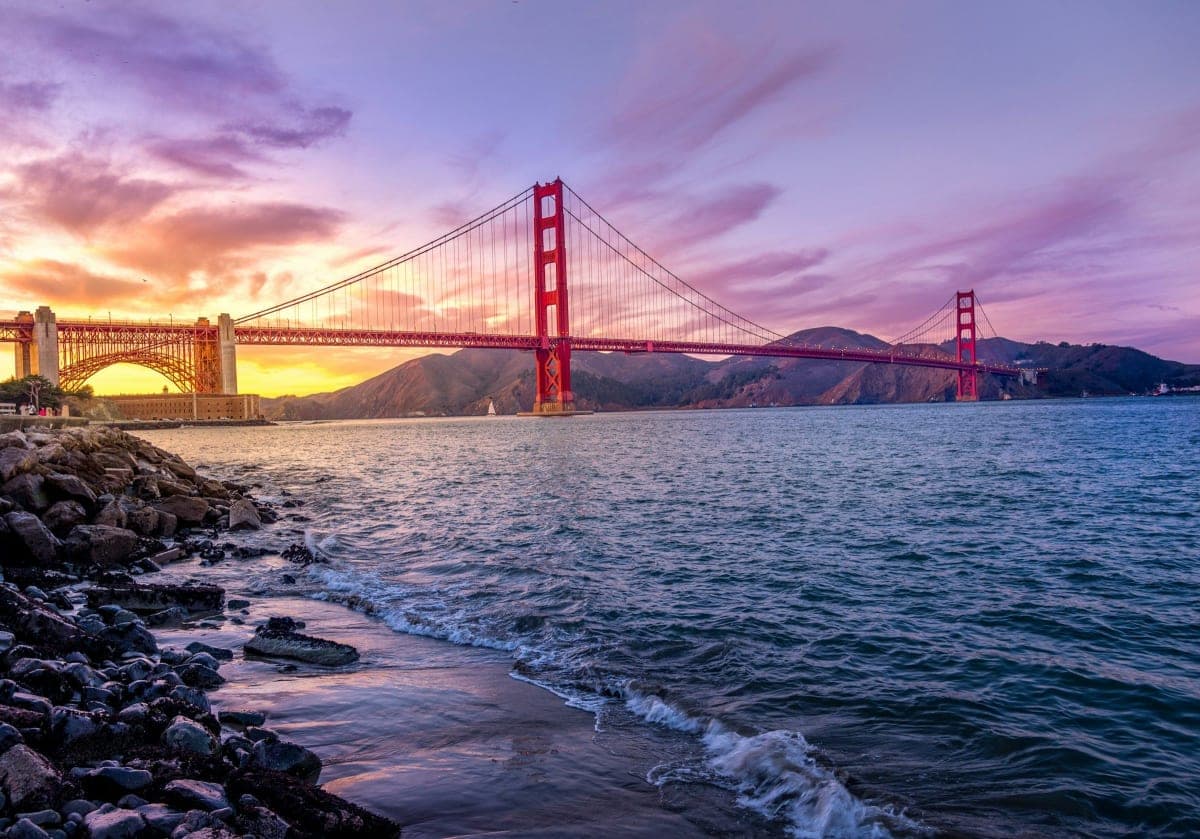
San Francisco, USA
A hilly bay city of cable cars, painted murals and a famous orange bridge, where a single day can run from fog and sea breeze to bright sun across a few neighbourhoods.
Updated
Key Takeaways
- September and October are the warmest, clearest months, while summer is the foggiest season: July highs sit around 19°C, and the fog often burns off later in the day.
- Temperatures change by neighbourhood, so a day can mix cool sea breeze on the western side and sun in the Mission; layers matter more than a heavy coat.
- Alcatraz needs a ferry ticket from the official operator (the island has no entrance fee) and Muir Woods needs a parking or shuttle reservation; book both before you arrive.
- The three cable car lines (Powell-Hyde, Powell-Mason and California Street) are a ride as much as a transport option; for everyday hops, Muni buses and trams cover the city.
- BART runs from the airport to downtown in about 30 minutes, and day trips reach Sausalito by ferry, Muir Woods by road and the Napa wine country by car.
Why Is San Francisco Worth Visiting?
San Francisco packs a world-famous bridge, a prison island, steep streets with cable cars, a deep food culture and redwood forest into a compact bay city that is easy to walk in short stretches.
The city sits on the tip of a peninsula between the Pacific Ocean and San Francisco Bay, and its hills decide almost everything: where the fog settles, where the views open up and why a short walk can feel like a workout. The Golden Gate Bridge, opened in 1937 and painted International Orange, anchors the north shore, with the old military post of the Presidio and its waterfront Crissy Field trails beside it. Chinatown, North Beach and the Mission each feel like a different city within a few kilometres, and across the bridge the redwoods of Muir Woods and the wine country of Napa and Sonoma are a short trip away. Navoy builds a day-by-day itinerary and books the stays and transfers in the same flow, so the hills and the ferry timetable are planned for you.
Where Should You Stay in San Francisco?
Union Square and the Financial District suit first-timers who want transit, North Beach and Fisherman's Wharf suit walkers and families, and the Mission and Haight-Ashbury suit travellers who want food, murals and a local feel.
Union Square and Downtown
The central shopping district, where the Powell Street cable car lines start and the BART and Muni lines meet; it is the easiest base without a car.
Fisherman's Wharf and North Beach
The waterfront of Pier 39, its sea lions and the Alcatraz ferry dock, beside the Italian cafés and bookshops of North Beach and the climb up Telegraph Hill to Coit Tower.
The Mission
A sunny, Latin-rooted district of taquerías, bakeries, bars and the Clarion Alley and Balmy Alley murals, next to Dolores Park.
Haight-Ashbury and Golden Gate Park
Victorian houses, vintage shops and the 1960s counterculture streets at the edge of Golden Gate Park, which runs west toward Ocean Beach.
| Area | Best For | Atmosphere | Getting Around |
|---|---|---|---|
| Union Square and Downtown | First visits, transit, shopping | Busy, central | BART, Muni and the Powell cable cars |
| Fisherman's Wharf and North Beach | Families, cafés, waterfront | Lively, touristy to local | Cable cars, Muni F-line and walking |
| The Mission | Food, murals, nightlife | Sunny, casual, creative | BART stations at 16th and 24th Streets |
| Haight-Ashbury | Vintage shops, park access | Relaxed, bohemian | Muni buses; hilly on foot |
What Are the Best Things to Do in San Francisco?
Walk or cycle the Golden Gate Bridge, ride a cable car, take the ferry to Alcatraz, eat in the Mission and North Beach, and spend a day in Muir Woods or the Napa wine country.
- Golden Gate Bridge and the Presidio: Walk across the roughly 2.7 km bridge or take the Crissy Field path along the bay for the classic view; fog can hide the towers, so build in a second chance.
- Alcatraz Island: A former federal prison in the bay, reached only by the official ferry from Pier 33; the island has no entrance fee but the ferry ticket is required, and tickets frequently sell out, so book ahead on the National Park Service Alcatraz page.
- Cable cars: Three lines run: Powell-Hyde, Powell-Mason and California Street; ride early to avoid the queues at the Powell Street turntable.
- Chinatown and North Beach: Lanterns and herbal shops around Grant Avenue and Stockton Street, then espresso, focaccia and bookshops a few blocks up.
- The Mission and Haight-Ashbury: Murals in the alleys, burritos, ice cream near Dolores Park, then the vintage shops and painted Victorians of the Haight.
- Day trips: Sausalito is about a 30-minute ferry ride from the Ferry Building; Muir Woods holds old-growth redwoods in Marin County; Napa and Sonoma are a full day by car.
What Should You Know Before Visiting San Francisco?
Plan around the fog and the microclimates, book Alcatraz and Muir Woods ahead, and use transit and ferries rather than a car for a city stay.
San Francisco's summer is cool, not hot: July highs sit around 19°C and the western neighbourhoods often wake to fog that can last into the afternoon, while September is usually the warmest and clearest month with highs around 21–22°C. The city is small enough that sun and fog can be a short ride apart, so pack layers and a windproof jacket whatever the month. BART runs from San Francisco International Airport (SFO) to Powell Street in about 30 minutes, which is the simplest arrival for a downtown stay. Muir Woods requires a reservation for parking or the shuttle, with the National Park Service pointing visitors to its official reservation system. A car is more trouble than help in the centre, so rely on BART, Muni and ferries. Hills are steep: choose a base with a flat route to transit if walking is hard.
Frequently Asked Questions
How many days do you need in San Francisco?
Three to four days covers the Golden Gate Bridge, Alcatraz, a cable car ride, Chinatown, North Beach and the Mission. Add a fifth day for Muir Woods and Sausalito, and a sixth for Napa or Sonoma. A week gives time for Golden Gate Park, the Haight and slower evenings.
Which area is better as a base in San Francisco?
Union Square and Downtown work best for first-timers because BART, Muni and the cable cars meet there. Fisherman's Wharf and North Beach suit families and walkers, while the Mission is better for food, murals and a local feel, though it is further from the main sights.
When is the best time to visit San Francisco?
September and October are usually the warmest and clearest months. Summer is the foggiest season, with highs around 19°C in July, so bring layers. Winter brings most of the rain. Book Alcatraz and Muir Woods ahead in any season, since both have limited entry.
Featured Itineraries
Swipe to see more →