
Punta del Este, Uruguay
Uruguay's Atlantic resort, where a calm bay beach and a surf coast sit on either side of one peninsula, with Casapueblo's white terraces and the quiet fishing village of José Ignacio close by.
Updated
Key Takeaways
- Punta del Este sits on a peninsula with two very different beaches: calm Playa Mansa on the bay side and wave-swept Playa Brava on the Atlantic side.
- The summer season runs December to March, with the busiest weeks around Christmas and New Year; outside it the resort is far quieter.
- Choose your base by mood: the Peninsula for walkability, La Barra for dining and nightlife, José Ignacio for a low-key village feel.
- Casapueblo, the white sculpture-house at Punta Ballena, is the classic sunset stop.
- Montevideo is a straightforward drive west along the coast, and a small airport near the resort handles regional flights.
Why Is Punta del Este Worth Visiting?
Punta del Este packs a calm swimming beach, a surf coast, a yacht-filled harbour and a string of artists' hideaways into one narrow peninsula, which makes it Uruguay's easiest beach holiday.
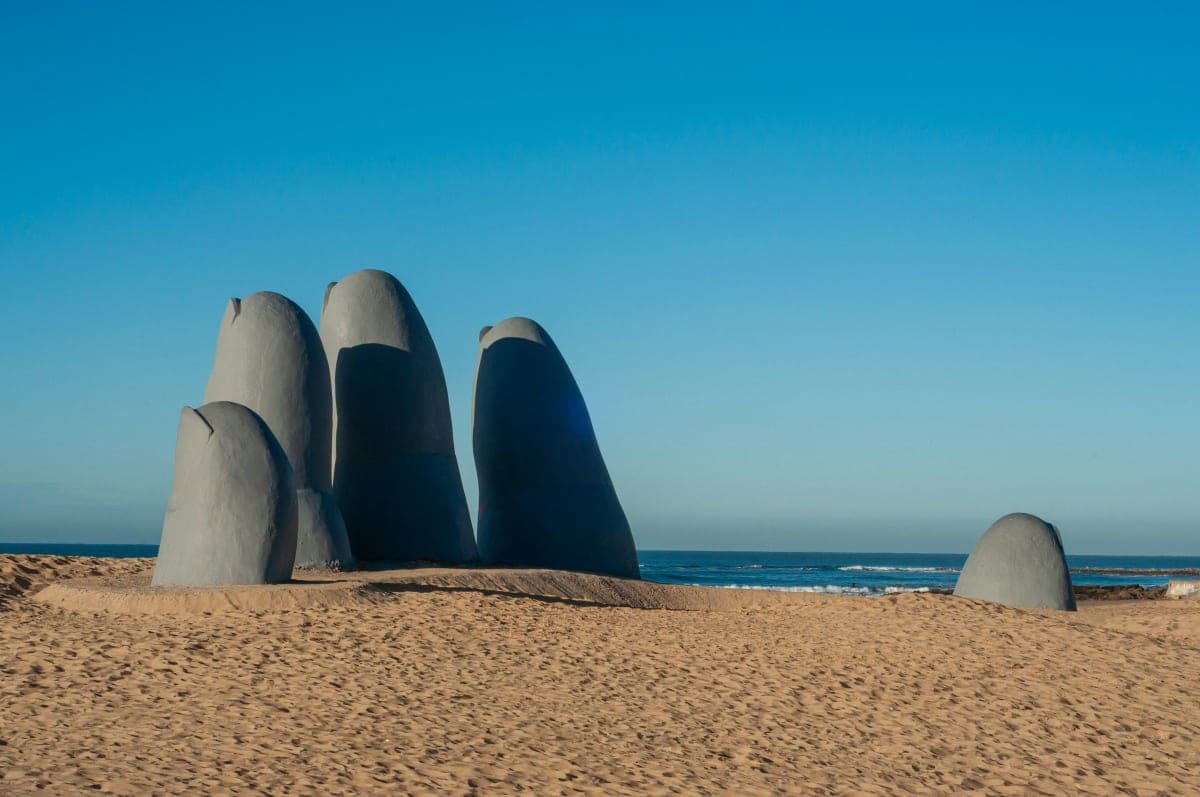
The town is built on a spit of land that juts into the South Atlantic where the Río de la Plata meets the open ocean. On one side, Playa Mansa faces the bay and the water is gentle. On the other, Playa Brava takes the full Atlantic swell, and the concrete fingers of La Mano en la Arena rise from the sand at Parada 1. The numbered paradas, the old tram stops, are still how locals describe where along the beach they are. Navoy builds a day-by-day itinerary and books the stays and transfers in the same flow.
Where Should You Stay in Punta del Este?
Stay on the Peninsula if you want to walk everywhere, in La Barra if you want restaurants and nightlife nearby, and in José Ignacio if you want a quiet village with big skies.
The Peninsula
The old centre, with the harbour, the Calle 20 shopping street and both beaches within a few minutes' walk. Easiest for first-timers and short stays.
Playa Mansa and Playa Brava
The residential strip along each coast. Mansa suits families who want calm water, while Brava suits surfers and anyone who likes a long, open beach.
La Barra
Across the Arroyo Maldonado bridge, a hilly beach village of galleries, design shops and late dinners, popular with a younger crowd.
José Ignacio
A small fishing village further east with a lighthouse, dune-backed beaches and a slower pace. Many visitors come for the day and linger for sunset.
| Area | Best For | Atmosphere | Getting There |
|---|---|---|---|
| Peninsula | First visits, walking, harbour | Lively in summer, calm otherwise | About 20 km from the regional airport |
| Playa Mansa | Families, swimming | Relaxed, residential | A short drive from the centre |
| La Barra | Dining, nightlife, galleries | Casual, social | A short drive east over the Leonel Viera bridge |
| José Ignacio | Quiet beaches, sunsets | Rustic, low-key | About 40 km east along Route 10 |
What Are the Best Things to Do in Punta del Este?
Watch the sun go down at Casapueblo, see La Mano on Playa Brava, take a boat out to the sea lion colony off the coast, and spend a day in José Ignacio.
- Casapueblo, Punta Ballena: The white, hand-built house-museum of the artist Carlos Páez Vilaró, begun in 1958 and stacked down a cliff above the water. Its terraces face west and are known for sunset.
- La Mano en la Arena: Mario Irarrázabal's 1982 sculpture of five fingers emerging from the sand, the resort's best-known landmark and a good marker for where Brava's currents are strong.
- Isla de Lobos: A rocky island reached by boat from the harbour, home to a large sea lion colony. Trips are usually run as guided cruises, with the animals seen from the water.
- The harbour and Peninsula walk: Fishing boats and yachts, sea lions near the fish stalls, and a stroll around the point at golden hour.
- José Ignacio: Walk the beach, see the lighthouse and linger over a long lunch in the village.
- Playa Brava surf or Playa Mansa swim: Pick your water by the day's wind and swell.
What Should You Know Before Visiting Punta del Este?
Punta del Este is a strongly seasonal resort: book early for late December to January, expect many places to scale back outside summer, and treat Playa Brava's waves with respect.
Summers are warm and winters are cool, so the sea is a December to March pleasure. Around Christmas and New Year the resort is at its busiest and rooms, restaurants and cars fill up, so plan ahead. Outside high season it is much quieter, with lower prices and easier beaches, but some seasonal venues may be closed, so check opening days before building a day around one. Playa Brava has real surf and strong currents, so swim where lifeguards are posted. Distances are short but there is no metro or tram, so most visitors rely on a rental car, a driver or taxis. From Montevideo it is about two hours by road along the coast highway, and the small regional airport near the resort takes flights from neighbouring countries. Planning a trip at navoy.io is free.
Frequently Asked Questions
How many days do you need in Punta del Este?
Four to five days covers the Peninsula, both beaches, Casapueblo at sunset and a day in José Ignacio. A week suits a slower summer holiday with a boat trip, a surf lesson and long beach days. If you are adding Montevideo, give the resort at least three nights so the two-hour road transfer is worth it.
Is the Peninsula or La Barra better as a base?
The Peninsula is better if you want to walk to the beaches, harbour and restaurants and have a short stay. La Barra is better for galleries, late dinners and a casual, social feel, but you will want a car or taxis. Many visitors stay on the Peninsula and drive out for evenings.
When is the best time to visit Punta del Este?
December to March is the beach season, with the peak around Christmas and New Year. For warm weather with fewer people, aim for the shoulder weeks at either end of summer. Winter is cool and very quiet, good for walks and uncrowded coastline but not for swimming, and some seasonal venues close.
Featured Itineraries
Swipe to see more →