
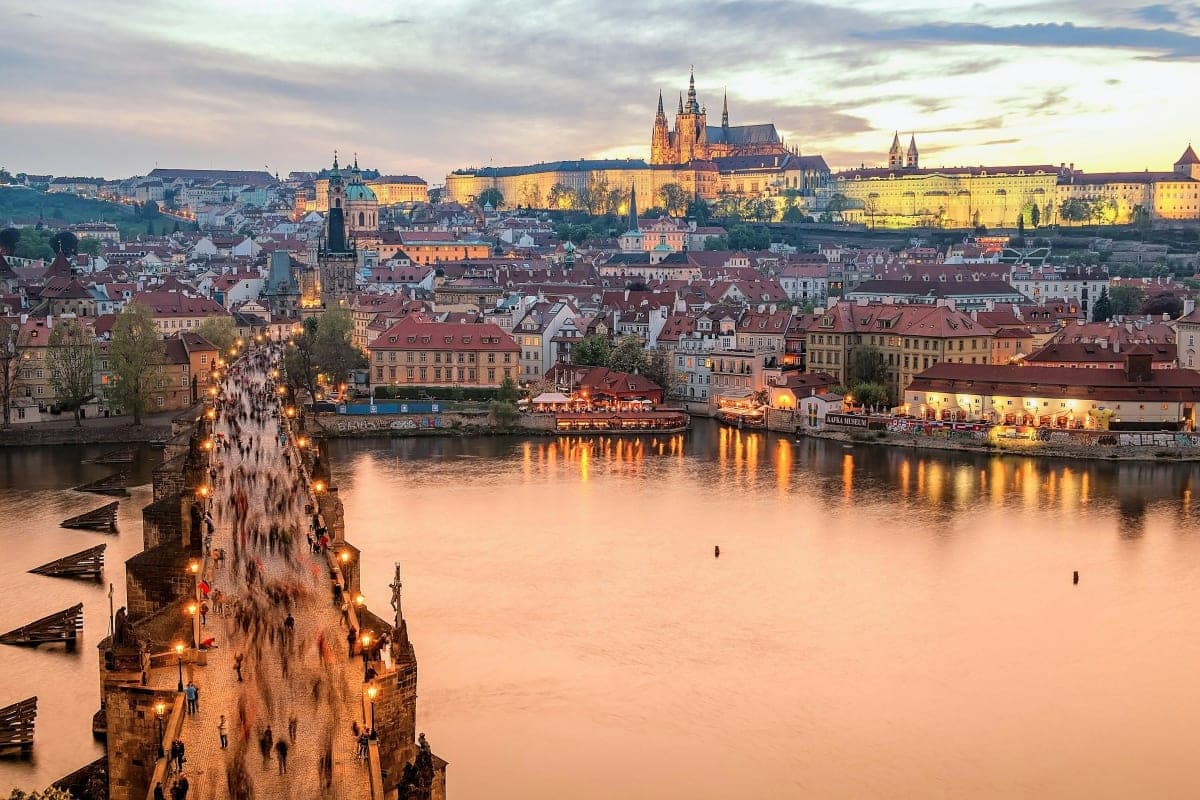
Prague, Czechia
A river city of Gothic spires, baroque palaces and beer halls, compact enough to walk and layered enough to fill a week: castle hill, Old Town lanes and café-lined Vinohrady.
Updated
Key Takeaways
- April to June and September to October are the most comfortable months for walking: mild days, long light and fewer crowds than midsummer.
- Choose your base by mood: Old Town for first visits, Malá Strana for quiet lanes below the castle, Vinohrady for cafés and a local feel.
- Trams and the three metro lines cover almost everything, so you rarely need a taxi inside the centre.
- Most sights sit on a river-crossing loop: Old Town, Charles Bridge, Malá Strana, then up to Prague Castle.
- Kutná Hora makes an easy day trip by train, roughly an hour from the main station.
Why Is Prague Worth Visiting?
Prague pairs one of Europe's best-preserved historic centres with cheap beer, walkable streets and a café and music culture that is still very much alive.
The Historic Centre of Prague is a UNESCO World Heritage Site, and you feel it within minutes: Gothic spires over Old Town Square, baroque palaces on the hill of Malá Strana and the long castle ridge of Hradčany above the Vltava. Distances are short, so a first-time visitor can cover the main sights on foot in two or three days. Then the city rewards a slower look: courtyards, riverside promenades, skyline views from Letná hill and neighbourhoods where locals outnumber visitors. Navoy builds a day-by-day itinerary and books the stays and transfers in the same flow.
Where Should You Stay in Prague?
Old Town suits first-time visitors, Malá Strana suits couples who want quiet lanes below the castle, and Vinohrady suits travellers who prefer cafés, parks and a local feel.
Old Town (Staré Město)
The medieval core around Old Town Square and the astronomical clock, with Josefov, the old Jewish Quarter, a few minutes away. Busy by day, lively at night.
Malá Strana
Baroque streets on the west bank beneath Prague Castle, reached across Charles Bridge. Calmer in the evening, with steep lanes and hidden gardens.
Vinohrady
A residential district of tall townhouses, tree-lined streets, wine bars and cafés, on the metro and tram network and a short ride from Wenceslas Square.
Karlín
A rebuilt riverside district east of the centre, with converted warehouses, restaurants and easy metro access.
| Area | Best For | Atmosphere | Time from Airport |
|---|---|---|---|
| Old Town | First visits, sightseeing, nightlife | Busy, historic | About 40 to 50 minutes |
| Malá Strana | Couples, castle access, quiet evenings | Romantic, hilly | About 45 to 55 minutes |
| Vinohrady | Cafés, longer stays, local life | Relaxed, residential | About 35 to 45 minutes |
| Karlín | Food, design, easy transit | Modern, riverside | About 40 to 50 minutes |
What Are the Best Things to Do in Prague?
Cross Charles Bridge early, climb to Prague Castle and St. Vitus Cathedral, wander Josefov, and finish the day with a view from Petřín or Letná hill.
- Charles Bridge: The stone bridge begun in 1357, lined with statues; go at sunrise before the crowds.
- Prague Castle and St. Vitus Cathedral: A hilltop complex of courtyards, palaces and a Gothic cathedral; allow half a day.
- Old Town Square and the astronomical clock: The city's main square, best seen once in the morning and again after dark.
- Josefov: The old Jewish Quarter, with historic synagogues and the Old Jewish Cemetery.
- Vyšehrad: A quieter fortress above the river, with riverside views and fewer visitors than the castle.
- Petřín Hill and Letná Park: Green viewpoints over the rooftops; Letná gives a wide skyline view.
- A Czech beer hall: Pilsner-style lagers, goulash and dumplings, a staple of any visit.
- Kutná Hora day trip: A UNESCO-listed town with a Gothic cathedral and the Sedlec Ossuary, about an hour from the main station by train.
What Should You Know Before Visiting Prague?
Use trams and the metro, wear comfortable shoes for cobblestones, and book the busiest sights for early morning.
Prague has three metro lines (A, B and C) and an extensive tram network, and one ticket type works across them, with time-limited tickets; validate a paper ticket when you enter the metro or board a tram or bus, while app tickets are valid from purchase. Cobbled streets and hills make flat, sturdy shoes a better choice than anything fashionable. Charles Bridge and Old Town Square are crowded from mid-morning, so go early or late. The currency is the Czech koruna, and cards are widely accepted, and an ATM inside a bank is a simpler way to get cash than a street exchange booth. Winters are cold, with temperatures around freezing in January, while summer days are warm, with July highs around 24°C.
Frequently Asked Questions
How many days do you need in Prague?
Three days covers the main sights: castle, Charles Bridge, Old Town and Josefov. Four or five days adds slower neighbourhoods like Vinohrady and Vyšehrad, plus a day trip to Kutná Hora. A week suits a relaxed pace with a longer excursion. The centre is compact, so you rarely lose time travelling between areas.
Is Old Town or Malá Strana better as a base in Prague?
Old Town puts you in the middle of the sights, restaurants and nightlife, which suits a first visit. Malá Strana is quieter in the evenings and sits beneath the castle, which suits couples. Both are walkable and within a short tram or metro ride of each other. Vinohrady is a good third choice for a local feel.
When is the best time to visit Prague?
April to June and September to October bring mild weather, long daylight and manageable crowds. July and August are warm and busier. December has a festive atmosphere with Christmas markets, though it is cold, and January is the quietest and coldest month. Spring and early autumn give the best balance for walking.
Featured Itineraries
Swipe to see more →