
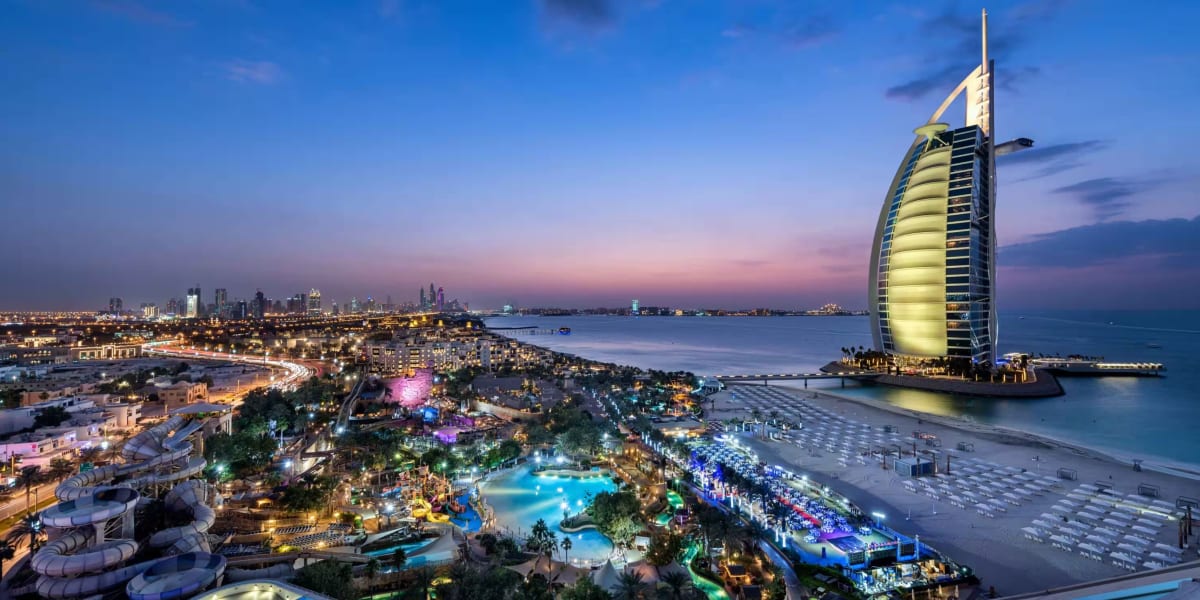
Dubai, UAE
The world's most audacious city — record-breaking architecture, desert safaris at sunrise, a souq gold market older than the skyscrapers, and year-round sunshine in the Arabian Gulf.
Updated
Key Takeaways
- Dubai is home to the world's tallest building (Burj Khalifa, 828m), largest mall, and longest automated metro — superlatives are built into the city's DNA.
- The historic Al Fahidi neighbourhood and Deira Gold Souq offer a glimpse of pre-oil Dubai — a trading port of merchants and dhow boats on the Creek.
- Desert safaris departing at sunset offer dune bashing, camel rides, and traditional Bedouin camp dinners under the stars, all within 45 minutes of downtown.
- Dubai is one of the world's major airline hubs — Emirates and flydubai connect it to virtually every major city, often making it a logical stopover.
- The best time to visit is October–April when temperatures are comfortable (20–30°C); summer (June–September) exceeds 40°C daily.
Why Is Dubai Worth Visiting?
Dubai is a masterclass in human ambition, seamlessly contrasting record-breaking modern architecture with traditional Arabian desert culture and historic trading souqs.
Dubai shouldn't exist — a city of 3.5 million people rising from a desert coastline, built almost entirely within the last 50 years. And yet it does exist, and on a scale that is genuinely astonishing in person. The Burj Khalifa is taller than you expect. The Palm Jumeirah is more improbable from the air. The gold in the souq weighs more than you can imagine. Dubai rewards visitors who engage with its contradictions: hyper-modern and deeply traditional, relentlessly commercial and genuinely hospitable.
Where Should You Stay in Dubai?
Downtown Dubai places you at the epicentre of the city's modern marvels, but Dubai Marina offers a more relaxed, pedestrian-friendly waterfront alternative.
Downtown Dubai
The Burj Khalifa, Dubai Mall, Dubai Fountain, and the financial district all sit in Downtown. Central, expensive, and spectacular — staying here puts you at the heart of modern Dubai.
Dubai Marina
A purpose-built waterfront neighbourhood with a dense cluster of high-rise hotels, restaurants, a beach, and the Dubai Marina Walk. More relaxed than Downtown with a younger, international crowd.
Deira / Bur Dubai (Old Dubai)
The historic creek-side districts — significantly cheaper accommodation, the Gold Souq, Spice Souq, and the Al Fahidi heritage area. The authentic counterpoint to the gleaming new city.
Palm Jumeirah
The iconic palm-shaped artificial island. Home to ultra-luxury resorts and exclusive beach clubs. Isolated from the rest of the city but extraordinary as an experience.
What Are the Best Things to Do in Dubai?
Scaling the world's tallest building and venturing into the Arabian desert are the non-negotiable highlights of any trip to the emirate.
- Burj Khalifa At The Top — The 124th or 148th floor observation decks offer a perspective of Dubai that nothing else matches. Book in advance; sunset slots sell out weeks ahead.
- Dubai Creek and Souqs — Take an abra (wooden water taxi) across the Creek between Deira and Bur Dubai. Explore the Gold Souq, Spice Souq, and the Al Fahidi Historical Neighbourhood.
- Desert Safari — An essential Dubai experience. Most operators run afternoon departures: dune bashing, sandboarding, camel rides, and a Bedouin camp dinner.
- Dubai Frame — A 150-metre picture frame structure with a glass-floored sky bridge, offering views of both old and new Dubai simultaneously.
- Jumeirah Beach — Free public beach access with direct views of the Burj Al Arab. Kite Beach is the most popular stretch with food trucks and water sports.
| Attraction | Advance Booking Required? | Nearest Metro Station | Estimated Cost (AED) |
|---|---|---|---|
| Burj Khalifa (At The Top) | Yes — weeks ahead for sunset | Burj Khalifa/Dubai Mall (Red Line) | 179+ AED |
| Desert Safari | Yes — 1–2 days ahead | N/A (hotel pickup) | 150–300 AED |
| Deira Gold Souq | No | Gold Souq (Green Line) | Free to wander |
| Dubai Frame | No | Dubai Frame (Red Line) | 50 AED |
What Should You Know Before Visiting Dubai?
Dubai's strict local laws require modest dress in public buildings and limit alcohol consumption to licensed venues, though the city is exceptionally safe and welcoming to visitors.
Public transport (Metro + bus) is clean, efficient, and inexpensive — the red and green Metro lines cover most tourist areas. Dress conservatively in souqs, mosques, and government buildings. Alcohol is served in licensed hotel bars and restaurants; public drinking is illegal. Friday is the holy day — opening hours shift accordingly. Tipping is appreciated but not expected; 10–15% is standard at restaurants.
Frequently Asked Questions
Is Dubai worth visiting beyond the shopping malls?
Absolutely. The historic creek districts, desert landscape, world-class dining, and sheer architectural ambition make Dubai genuinely compelling for travellers who engage with it beyond the malls. The contrast between Al Fahidi's wind-tower heritage houses and the Burj Khalifa is itself a story worth experiencing.
Is Dubai safe for tourists?
Dubai is consistently ranked among the safest cities in the world. Crime rates are extremely low. However, laws are strict — public displays of affection, alcohol outside licensed venues, and criticism of the government can result in fines or detention. Understanding local laws before visiting is important.
How many days do you need in Dubai?
3–4 days covers the main highlights: Burj Khalifa, the souqs and Creek, a desert safari, and the Marina or Palm. 5–6 days allows Abu Dhabi day trips (Sheikh Zayed Grand Mosque), deeper exploration of Old Dubai, and more beach time.
Featured Itineraries
Swipe to see more →