
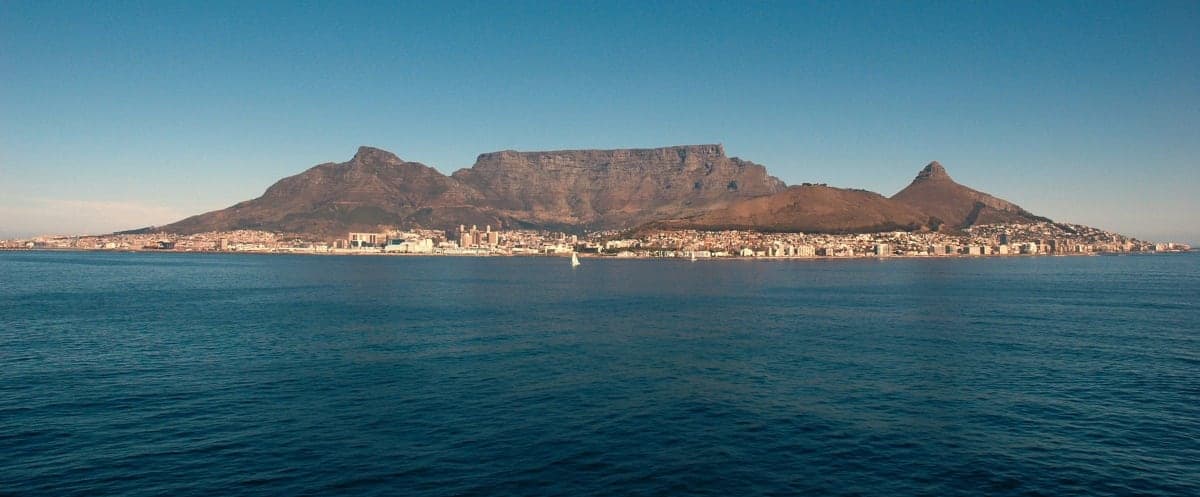
Cape Town, South Africa
A city squeezed between a flat-topped mountain and two oceans, where you can ride a cable car before breakfast, watch penguins after lunch and be among Stellenbosch vineyards by late afternoon.
Updated
Key Takeaways
- The Table Mountain Aerial Cableway closes in bad weather, above all high wind, so check its live status on the morning you plan to go up and keep a second day free as a backup.
- Summer (November to March) is dry and warm, with highs around 25 to 26°C, but the south-easter wind, nicknamed the Cape Doctor, blows hardest in January and February; winter (June to August) brings cold fronts with rain and highs around 18°C.
- Pick a base by trip style: the Atlantic Seaboard (Sea Point, Camps Bay) for beaches and sunsets, the City Bowl for walkability and nightlife, Constantia for vineyards and quiet.
- Cape Point, the Cape of Good Hope and the Boulders Beach penguin colony all sit inside Table Mountain National Park, run by SANParks, and each charges a conservation fee at the gate.
- Southern right whales visit the Cape coast from June to November, so a spring trip can add shore-based whale watching at Hermanus, about a 1.5-hour drive from the city.
Why Is Cape Town Worth Visiting?
Cape Town puts a 1,085-metre mountain, white-sand Atlantic beaches, a penguin colony, a UNESCO-listed prison island and the Stellenbosch and Franschhoek wine valleys inside one city and its day-trip radius.
From the City Bowl, the top of Table Mountain is a cable car ride or a steep climb away. Over Kloof Nek lie Camps Bay and Clifton. Down the peninsula, past Simon's Town and its penguins, the land narrows to Cape Point. About 45 minutes east, Stellenbosch and Franschhoek fill their valleys with Cape Dutch wine farms. Navoy builds a day-by-day itinerary around those clusters and books the stays and transfers in the same flow.
Where Should You Stay in Cape Town?
The Atlantic Seaboard suits beach and sunset trips, the City Bowl suits travellers who want to walk to restaurants and be close to the cableway, and Constantia suits couples who want vineyards at the door.
City Bowl
The amphitheatre between Table Mountain, Lion's Head and Signal Hill. Gardens and Tamboerskloof put Kloof Street's restaurants, the Company's Garden and the Bo-Kaap within walking distance, with the Lower Cable Station a short drive up the slope.
Atlantic Seaboard
Sea Point's promenade, Clifton's four granite-boulder coves and Camps Bay's palm-fronted beach under the Twelve Apostles. The sea is cold year-round: the south-easter drives upwelling, so the Atlantic sits around 10 to 15°C while False Bay reaches 16 to 22°C in summer.
V&A Waterfront
A working harbour since about 1860, now a shopping and dining district with Zeitz MOCAA in the old grain silo, the Two Oceans Aquarium and the Robben Island ferry. Convenient, but the least local-feeling base.
Constantia and the Southern Suburbs
Leafy and quiet, about 30 minutes from the centre, with Groot Constantia (South Africa's first wine farm, 1685) and Kirstenbosch nearby. You'll need a car or ride-hailing.
False Bay
Muizenberg's surf beach and Victorian bathing boxes, Kalk Bay's fishing harbour and Simon's Town, home of the South African Navy since the early 1900s. Warmer water, and closest to Boulders and Cape Point.
| Area | Best For | Atmosphere | Time from Airport |
|---|---|---|---|
| City Bowl | Walkability, restaurants, Table Mountain | Urban, lively | About 20 to 30 minutes |
| Atlantic Seaboard | Beaches, sunsets, couples | Polished, scenic | About 30 to 40 minutes |
| V&A Waterfront | Short stays, families, Robben Island | Busy, polished | About 20 to 30 minutes |
| Constantia | Wine, quiet, Kirstenbosch | Leafy, residential | About 25 to 35 minutes |
| False Bay | Surf, penguins, Cape Point | Village, relaxed | About 30 to 45 minutes |
What Are the Best Things to Do in Cape Town?
Go up Table Mountain early on a still morning, take the Robben Island tour, drive the peninsula loop to Boulders and Cape Point, and give the Winelands a full day.
- Table Mountain: The Aerial Cableway's round cars give a 360° view; the upper station closes when high winds approach, so check the live status first. Hikers take Platteklip Gorge, steep and exposed, in one to three hours.
- Robben Island: Ferries leave from the Nelson Mandela Gateway at the V&A Waterfront for a tour of about three and a half hours: a bus tour of the island, then a guided walk through the maximum security prison to Nelson Mandela's cell, with former political prisoners among the guides. Book ahead; tours are cancelled in adverse weather.
- Cape Point and the Cape of Good Hope: The southern section of Table Mountain National Park, where two lighthouses mark the most south-western point of Africa; ride the Flying Dutchman funicular or walk up to the old lighthouse.
- Boulders Beach: Boardwalks run through a colony of endangered African penguins at Simon's Town; a SANParks conservation fee applies.
- Kirstenbosch National Botanical Garden: Fynbos and proteas on the eastern slopes of Table Mountain, laid out in 1913, with the Boomslang treetop walkway and Sunday sunset concerts from late November to March.
- Bo-Kaap: Steep cobbled streets of painted houses at the foot of Signal Hill, most built between 1760 and 1840, the historic home of the city's Cape Malay community; the Bo-Kaap Museum tells the story.
- Stellenbosch and Franschhoek: Cape Dutch wine estates about 50 and 80 km east, roughly 45 minutes and just over an hour by car; Franschhoek's hop-on hop-off wine tram means nobody has to drive.
- Chapman's Peak Drive: A toll road cut into the cliffs between Hout Bay and Noordhoek.
What Should You Know Before Visiting Cape Town?
Use ride-hailing in the city and a rental car for the peninsula and Winelands, keep valuables out of sight, hike in a group, and leave slack for the weather.
Cape Town International Airport (CPT) is 20 km from the city centre, about 20 minutes by road outside rush hour. Ride-hailing apps are a safe, reliable way around town; for Cape Point and the Winelands a rental car gives the most freedom. You drive on the left, and it is best not to drive at night. Tap water is safe to drink. Leave nothing visible in a parked car, and on Table Mountain hike in a group of four or more and tell someone your route and return time, as SANParks advises. Summer afternoons bring the south-easter, so mornings are calmer for the cableway and the beaches. Tipping 10 to 15 percent is customary in restaurants and for guides; car guards expect a few rand. Planning a trip at navoy.io is free.
Frequently Asked Questions
How many days do you need in Cape Town?
Five days covers the essentials: Table Mountain, Robben Island, a peninsula loop to Boulders and Cape Point, the Bo-Kaap and one Winelands day. Seven days adds a second wine valley, a Kirstenbosch or Constantia morning and a buffer for the weather, which matters because the cableway and the island ferry both stop in high wind and rough seas.
Is the Atlantic Seaboard or the City Bowl better as a base in Cape Town?
Choose the Atlantic Seaboard (Sea Point, Camps Bay) if beaches, the promenade and sunsets matter most; it is quieter at night and you'll ride-hail into town. Choose the City Bowl (Gardens, Tamboerskloof) if you want to walk to restaurants and nightlife and be closest to the cableway. Constantia suits wine lovers who don't mind driving.
When is the best time to visit Cape Town?
November to March is dry and warm, with highs around 25 to 26°C, and busiest, with the south-easter wind as the trade-off. June to August brings cold fronts, rain and lower prices, with clear days in between. September and October bring spring flowers and the tail end of whale season with fewer crowds, a good compromise.
Featured Itineraries
Swipe to see more →