
Busan, South Korea
Korea's port city of beaches, hillside villages and seafood markets, where a seaside temple, a fish market and a skyline of beachfront towers sit within one metro ride of each other.
Updated
Key Takeaways
- Busan is at its best in spring (April to June) and autumn (September to November), with comfortable temperatures and clear skies for beaches and viewpoints.
- Choose your base by mood: Haeundae for the big beach, Gwangalli for café-lined sand facing the Gwangan Bridge, Nampo for markets and old-town streets.
- Gimhae Airport connects to the city by light rail, which meets Metro Line 2 at Sasang, so most trips need no taxi.
- Haedong Yonggungsa is one of the few temples in Korea built on the seashore, and Jagalchi is one of the country's largest fish markets.
- Typhoons are most likely in August and September, and early summer brings a rainy spell, so build in a flexible day.
Why Is Busan Worth Visiting?
Busan gives you a beach city, a working port and a temple coast in one place, with hillside villages, seafood markets and a clear metro that make it easy to move between them.
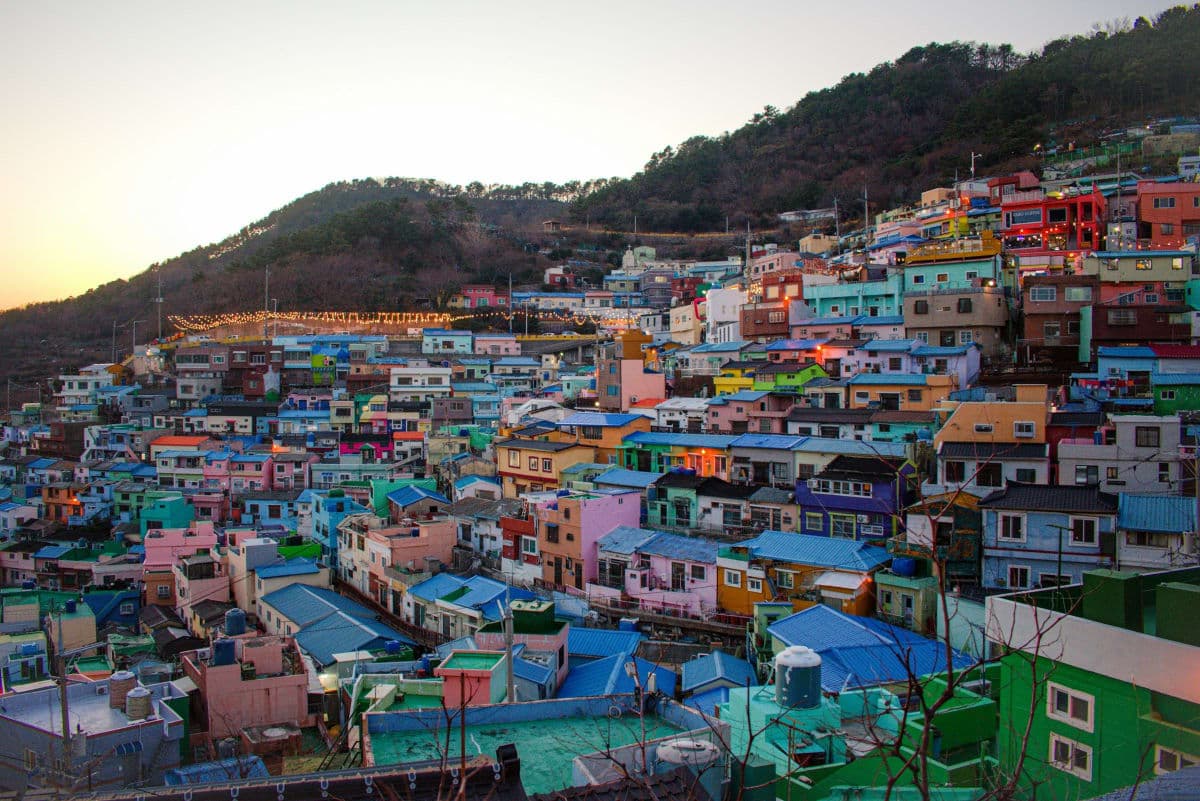
Korea's second city wraps around a harbour and a string of bays, and each one has its own character. Haeundae is the long city beach backed by towers. Gwangalli is a half-moon cove where a lit-up suspension bridge crosses the water at night. Nampo and Jagalchi are the old port, loud with vendors and grill smoke. On the slopes above, painted houses in Gamcheon Culture Village climb the hill like a staircase. It rewards slow, curious days: a market lunch, a sea cliff walk, a temple, then a late dinner by the water. Navoy builds a day-by-day itinerary and books the stays and transfers in the same flow.
Where Should You Stay in Busan?
Haeundae suits first-timers and beach lovers, Gwangalli suits couples and café hoppers, and Nampo suits travellers who want markets, street food and the old port on the doorstep.
Haeundae
The best-known beach in Busan, about 1.5 km of sand with a promenade, a long line of hotels and plenty of places to eat. The seaside temple of Haedong Yonggungsa is an easy ride away.
Gwangalli
A curved cove of about 1.4 km facing the illuminated Gwangandaegyo (Gwangan Bridge), with rows of cafés, bars and restaurants in the alleys behind the sand. It is on Metro Line 2.
Nampo and Jagalchi
The old centre by the harbour, with Jagalchi Market, Gukje Market, street-food alleys and the steps up to the hillside lookouts. Metro Line 1 runs from here through Seomyeon.
Seomyeon
The city's transport and shopping hub, where Lines 1 and 2 cross. It is not scenic, but it is central and busy at night.
| Area | Best For | Atmosphere | From Gimhae Airport by Rail |
|---|---|---|---|
| Haeundae | Beach, first visits, families | Resort, polished | About 1 hour |
| Gwangalli | Couples, cafés, bridge views | Relaxed, lively after dark | About 1 hour |
| Nampo and Jagalchi | Markets, street food, history | Busy, local | About 1 hour |
| Seomyeon | Shopping, nightlife, transit | Urban, central | About 40 to 55 minutes |
What Are the Best Things to Do in Busan?
Walk the lanes of Gamcheon Culture Village, eat at Jagalchi Market, visit Haedong Yonggungsa on its sea cliff, and finish a day at Gwangalli with the bridge lit up.
- Gamcheon Culture Village: A hillside neighbourhood of stacked, brightly painted houses, small galleries and murals; go early to beat the groups.
- Jagalchi Market: one of Korea's largest fish markets, where you can eat fresh seafood at the market's restaurants and stalls.
- Haedong Yonggungsa: A temple perched on rocks above the East Sea in Gijang, worth a morning for the sea views.
- Taejongdae: A park of wooded cliffs at the southern tip of Yeongdo island, with a lighthouse and an observatory over open water.
- Gwangalli and Haeundae beaches: Swim in summer, walk the promenade in any season, and watch the bridge lights from the café terraces.
- Beomeosa and the hills: A mountain temple on the northern edge of the city, reached from the metro.
- Street food and markets: Try fish cake, hotteok (sweet filled pancakes) and tteokbokki around Gukje Market and the Nampo alleys.
What Should You Know Before Visiting Busan?
Use the metro and the light rail for most journeys, avoid August and September if you hate typhoon risk, and carry cash or a transit card for markets.
The Busan Metro has four numbered lines plus the Busan-Gimhae Light Rail, and Seomyeon is the main change point for Lines 1 and 2. A rechargeable transit card works across the metro and city buses, and street stalls often prefer cash. Summers are hot and humid, with August the warmest month, and the rainy season falls in early summer. Typhoons are most likely in August and September, so keep one day flexible. Hills are steep in Gamcheon and around Nampo, so wear flat, grippy shoes. Seafood is the heart of eating here, but raw dishes are optional; grilled fish, soups and noodles are easy alternatives. The fast train from Seoul takes roughly two and a half hours, so Busan also works as a stop on a longer Korea trip.
Frequently Asked Questions
How many days do you need in Busan?
Three full days covers the main sights: Gamcheon and Jagalchi in one day, Haedong Yonggungsa and Haeundae in another, and Taejongdae and Gwangalli in a third. Five days lets you slow down, add Beomeosa, a day by the sea and long evenings in the markets, without rushing between areas.
Is Haeundae or Gwangalli better as a base in Busan?
Haeundae suits first-timers and families who want a big beach, wide pavements and plenty of hotels. Gwangalli is smaller and calmer by day, with café terraces and the lit-up bridge at night, which many couples prefer. Both sit on Metro Line 2, so you can easily visit the other.
When is the best time to visit Busan?
Spring (April to June) and autumn (September to November) bring mild weather and clear days. July and August are hot and humid, with a rainy spell in early summer and typhoon risk in August and September. Winters are cold, with fewer visitors, and suit travellers who prefer temples, food and city sights to beaches.
Featured Itineraries
Swipe to see more →