
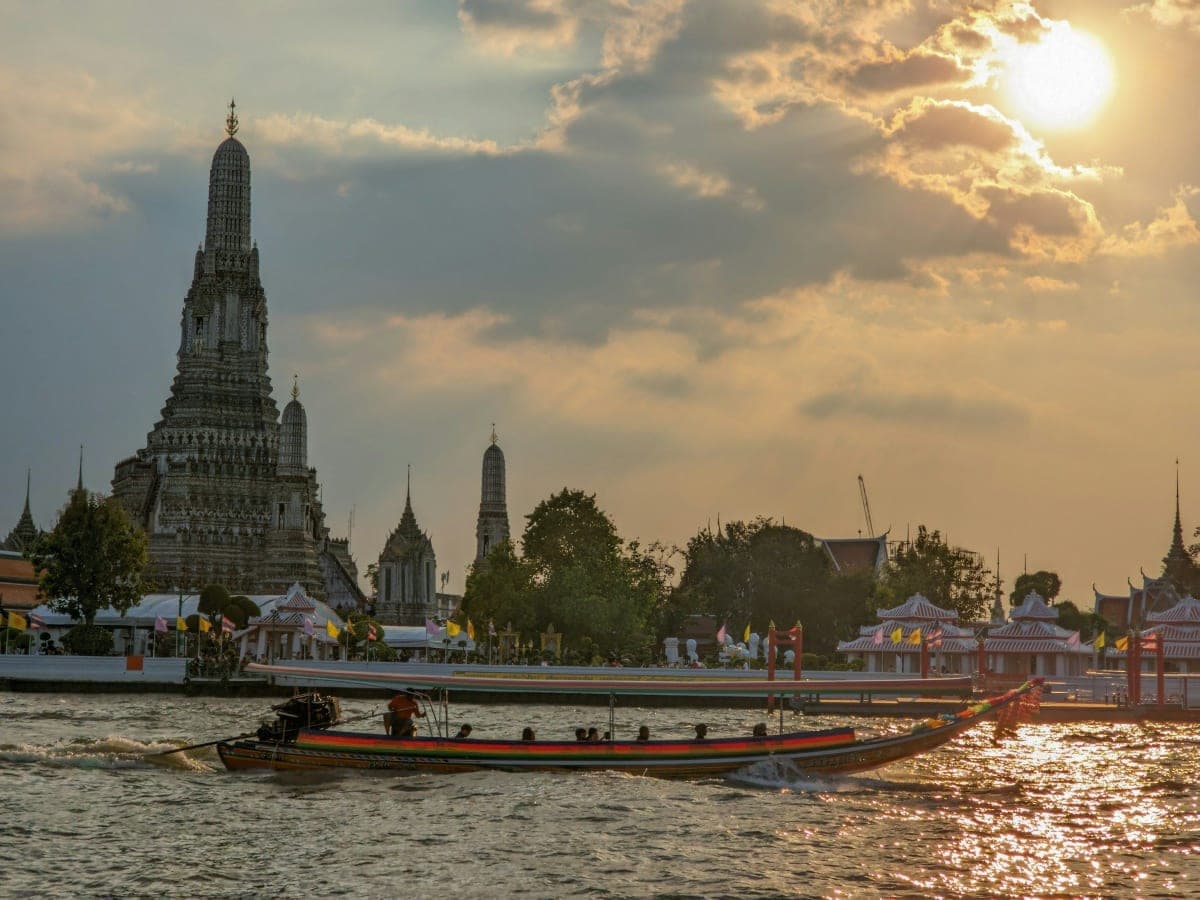
Bangkok, Thailand
A river city of gilded temples, Skytrain lines and street food on every corner, where each district sets its own pace: Riverside for the Chao Phraya, Sukhumvit for nightlife, the Old City for the Grand Palace.
Updated
Key Takeaways
- Bangkok's cool, dry season runs from about mid-October to mid-February, with November to January the most comfortable; mid-February to mid-May is the hot season, with April the hottest month, and the rains fall from about mid-May to mid-October.
- Pick a base by trip style: Riverside for the river and the temples, Sukhumvit for nightlife and malls on the BTS, Silom/Sathorn for a central mix, the Old City for the Grand Palace on foot.
- The Grand Palace charges $15 (THB 500) and turns away sleeveless tops, shorts, tight or torn trousers and see-through clothing; Wat Pho and Wat Arun expect covered shoulders and knees too.
- Chatuchak Weekend Market only opens in full on Saturdays and Sundays, so a trip that includes a weekend fits it in.
- Bangkok has two airports: Suvarnabhumi (BKK), linked to the city by the Airport Rail Link, and Don Mueang (DMK), used by many low-cost airlines.
Why Is Bangkok Worth Visiting?
Bangkok packs gilded royal temples, a working river, some of the best street food anywhere and a cheap, fast rail network into one city, and it doubles as the gateway to the rest of Thailand.
Treat Bangkok as a set of districts, not one sprawl. The Old City on Rattanakosin island holds the Grand Palace, Wat Pho and the ferry to Wat Arun. Downstream, the Riverside hotels sit on the Chao Phraya with express boats as their front door. Sukhumvit and Silom/Sathorn are the modern city: Skytrain lines, malls, rooftop bars and most of the nightlife. Navoy builds a day-by-day itinerary and books the stays and transfers in the same flow, which matters in a city where the wrong base costs an hour in traffic each way.
Where Should You Stay in Bangkok?
Stay by the river for temples and views, in Sukhumvit for nightlife and the BTS, in Silom/Sathorn for a central base with boat and train links, or in the Old City for the Grand Palace on foot.
Riverside
Hotels along the Chao Phraya between Saphan Taksin and the Old City, with express boats and hotel shuttles outside and sunsets over Wat Arun for free. The trade-off: the BTS only touches the river at Saphan Taksin.
Sukhumvit
The spine of the BTS Sukhumvit Line from Nana and Asok out to Thonglor and Ekkamai: malls, rooftop bars, late-night streets and the widest hotel choice.
Silom/Sathorn
The business district by day, lively after dark, with Lumphini Park next door, both the BTS Silom Line and the MRT Blue Line, and Sathorn Pier for the river.
Old City (Rattanakosin)
Guesthouses and small hotels within walking distance of the Grand Palace, Wat Pho and the Khao San Road bar strip. Thin on rail: MRT Sanam Chai is the nearest station, and the rest is boats, taxis and tuk-tuks.
| Area | Best For | Atmosphere | Getting Around |
|---|---|---|---|
| Riverside | Temples, views, couples | Calm, scenic | Express boats, hotel shuttles, BTS at Saphan Taksin |
| Sukhumvit | Nightlife, malls, longer stays | Busy, late-night | BTS Sukhumvit Line, MRT at Sukhumvit station |
| Silom/Sathorn | Central mix, first-timers | Business by day, lively at night | BTS Silom Line, MRT Blue Line, Sathorn Pier |
| Old City (Rattanakosin) | Grand Palace on foot, budget stays | Historic, low-rise | MRT Sanam Chai, river boats, taxis |
What Are the Best Things to Do in Bangkok?
See the Grand Palace and Wat Pho early, cross to Wat Arun by ferry, ride the Chao Phraya by express boat, eat along Yaowarat after dark, and give a weekend morning to Chatuchak.
- The Grand Palace and Wat Phra Kaew: The royal compound and the Temple of the Emerald Buddha, open daily from 8:30am with tickets sold until 3:30pm; $15 (THB 500) for foreign visitors, including the Queen Sirikit Museum of Textiles. The dress code is enforced at the gate.
- Wat Pho: Next door, home to the 46-metre Reclining Buddha and the traditional massage school. Open daily 8:30am to 7:30pm; $9 (THB 300) for foreigners.
- Wat Arun: The Temple of Dawn, a short cross-river ferry from Tha Tien pier. Open daily, roughly 8am to 6pm; $6 (THB 200) for foreign visitors. Best seen lit up from the opposite bank at dusk.
- The Chao Phraya by boat: The orange-flag express boat runs on weekdays for a flat fare under $1 (THB 19) from Sathorn Pier at BTS Saphan Taksin up past the Old City; a hop-on hop-off tourist boat sells all-day passes.
- Yaowarat (Chinatown): Noodles, dim sum, grilled seafood and dessert stalls fill Yaowarat Road and its lanes in the evening. MRT Wat Mangkon drops you in the middle.
- Chatuchak Weekend Market: More than 8,000 stalls, open in full on Saturday and Sunday, roughly 9am to 6pm. Go in the morning before the heat; BTS Mo Chit or MRT Chatuchak Park.
- Ayutthaya day trip: The former Siamese capital, founded in 1350 and sacked in 1767, is a UNESCO World Heritage site about 85 km north. Trains take around two hours; rent a bicycle for the Buddha head in the tree roots at Wat Mahathat and the riverside prang of Wat Chaiwatthanaram.
What Should You Know Before Visiting Bangkok?
Dress for the temples, learn the two airports, take the Skytrain and MRT instead of taxis at rush hour, and plan your days around the heat.
Temple etiquette: shoulders and knees covered, shoes off before entering any building with a Buddha image, never point your feet at a Buddha or a monk, and women don't touch monks. The Grand Palace enforces the strictest version at its gate.
Suvarnabhumi (BKK) handles most full-service airlines; the Airport Rail Link runs from the basement to Phaya Thai in about 30 minutes for under $1.50 (THB 45), with BTS and MRT connections. Don Mueang (DMK) serves many low-cost carriers; the SRT Red Line reaches Krung Thep Aphiwat Central Terminal (MRT Blue Line) in about 20 minutes, and the A1 and A2 buses run to BTS Mo Chit for about $1 (THB 30). A free shuttle links the two airports for passengers with onward tickets.
In town, the BTS Skytrain (Sukhumvit and Silom lines) and the MRT (Blue and Purple lines) are air-conditioned, frequent and cheap, with single fares from about $0.50 (THB 17). Metered taxis and ride-hailing are inexpensive but slow at rush hour; insist on the meter.
The cool, dry season from about mid-October to mid-February is the most comfortable. The hot season runs from about mid-February to mid-May, with April the hottest month, when daytime highs regularly pass 35°C. Rains arrive around mid-May and ease by mid-October, mostly as heavy afternoon bursts. Songkran, the Thai New Year, turns the city into a water fight each mid-April; carry nothing that can't get wet.
Frequently Asked Questions
How many days do you need in Bangkok?
Three full days cover the Old City temples, a day on the river and an evening in Yaowarat. Five days adds Chatuchak (if your stay includes a weekend), a cooking class and an Ayutthaya day trip. Many travellers use Bangkok as a two- or three-night bookend to a beach or northern leg, which works because both airports connect to the whole country.
Is Riverside or Sukhumvit better as a base in Bangkok?
Riverside is better for temples, sunsets and a calmer first visit, with the express boats outside the door. Sukhumvit is better for nightlife, malls and late dinners, and it sits on the BTS so you reach most of the modern city without traffic. Silom/Sathorn splits the difference: on both rail lines and a short walk from Sathorn Pier.
When is the best time to visit Bangkok?
November to February is the cool, dry season, with the most comfortable temperatures and the biggest crowds. March to mid-May is very hot, with April the peak, so plan temples for early morning. The rainy season from about mid-May to October brings short, heavy downpours, lower hotel rates and green day trips. Mid-April is Songkran, the national water festival.
Featured Itineraries
Swipe to see more →